Budget Travel Guide: 2025 Ultimate Frugal Tips
Why Budget Travel Is More Accessible Than You Think
A budget travel guide is your roadmap to exploring the world without emptying your wallet. The secret isn’t about traveling cheap—it’s about traveling smart. It means prioritizing value and experiences over unnecessary expenses.
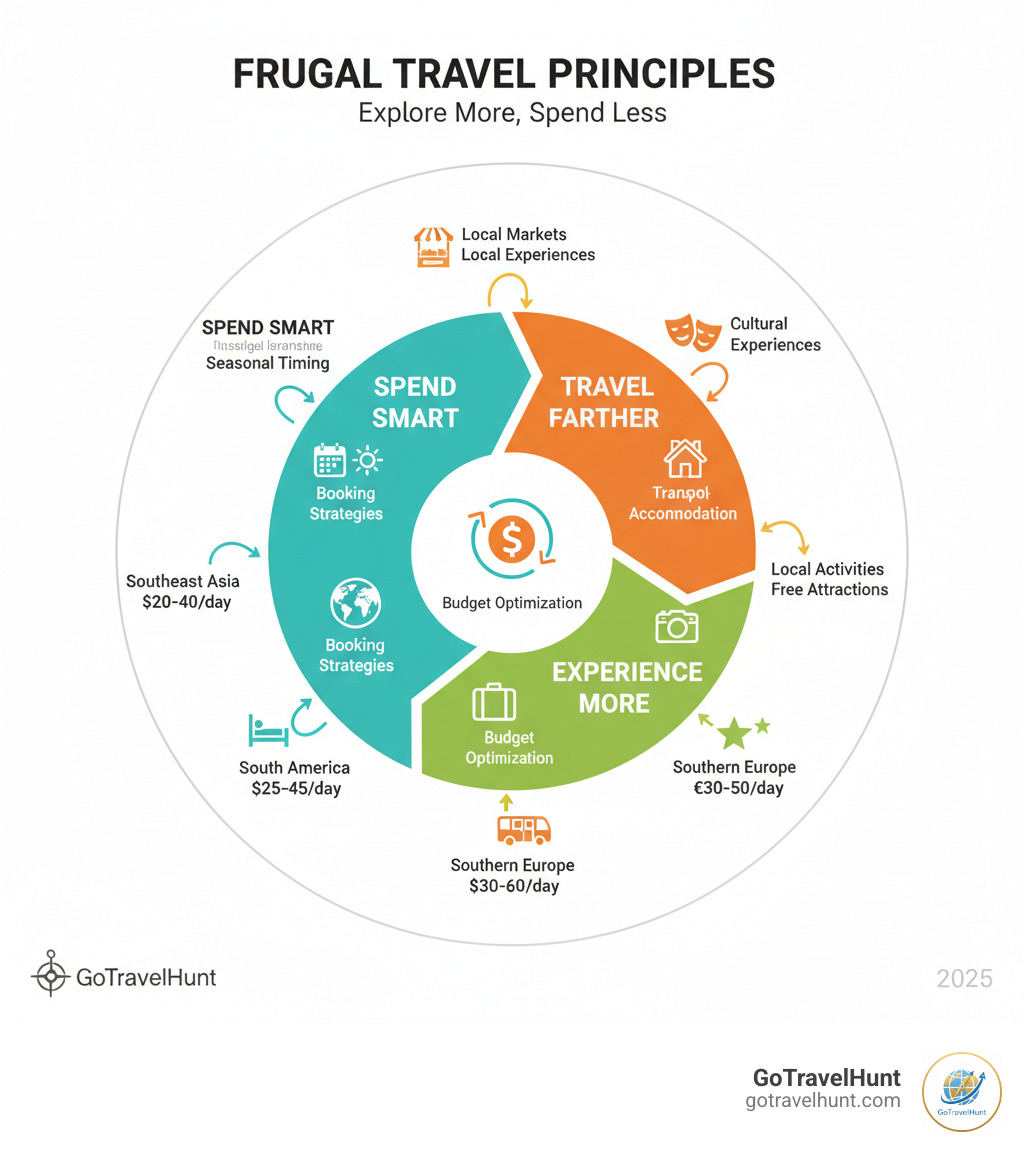
Core Principles of Budget Travel:
- Plan Early – Book flights and accommodation in advance to secure the best prices.
- Travel Smart – Choose the shoulder season (just before or after peak times) for lower costs.
- Stay Local – Use hostels, guesthouses, or homestays instead of hotels.
- Eat Like a Local – Shop at markets and cook your own meals when possible.
- Use Public Transport – Skip taxis for buses and trains.
- Prioritize Experiences – Spend on what matters most, save on everything else.
Daily Budget Examples by Region:
- Southeast Asia: $20-40/day
- Eastern Europe: $30-60/day
- South America: $25-45/day
- Southern Europe: €30-50/day
With over 54% of travelers actively seeking budget-friendly options, the demand for affordable adventures has never been higher. The budget travel landscape has evolved. Low-cost airlines connect continents, modern hostels offer private rooms, and apps help you find amazing street food. The barriers to affordable travel have never been lower.
This guide cuts through the noise to give you specific, actionable strategies. We’ll show you how to find affordable flights, eat well for less, and why a hostel can deliver a better experience than a hotel. Smart planning beats a big budget every time.
I’m Ramy Saber, founder of GoTravelHunt, and I’ve spent years testing budget travel strategies. This budget travel guide distills those lessons into a practical framework for your own affordable adventures.
Budget travel guide further reading:
The Art of Frugal Travel Planning
The planning phase is where smart travelers win the game. It’s about creating a strategy that lets you travel further and experience more without financial stress. A solid budget travel guide transforms from helpful reading into real savings.
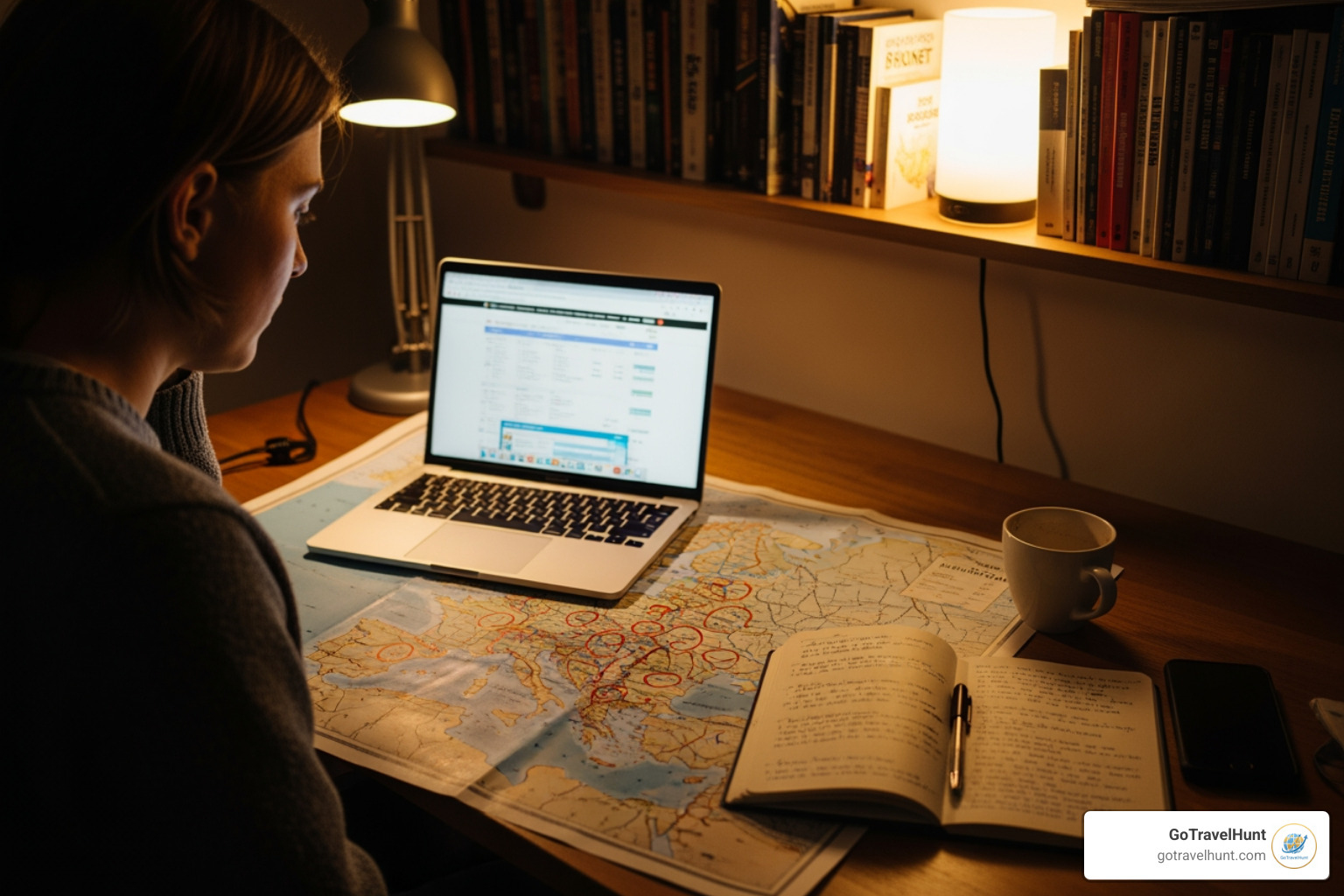
Frugal travel is about spending money where it counts—on value, not deprivation. The biggest mistake is not planning enough. Spontaneity sounds romantic, but it’s expensive. For those watching their wallets, planning is what makes travel possible.
Crafting Your Travel Blueprint
Your travel blueprint starts with real numbers. Look for actual cost breakdowns from other travelers. Websites like Numbeo show real-time prices for groceries, transport, and meals in cities worldwide.
Once you know the costs, set a clear savings goal with a deadline. Small changes create big results. Skipping a daily €5 coffee three times a week saves €60 a month. Cutting restaurant meals by €150 a month adds up. Together, that’s €1,260 saved in six months—enough for a month of travel in Southeast Asia.
The power is in redirecting money you’re already spending toward something that matters more. Track your progress with budgeting apps or a spreadsheet to stay motivated.
Timing is Everything: The Shoulder Season Advantage
When you travel matters as much as where. Peak season (summer holidays, Christmas) means high prices and big crowds. Off-season has lower prices but often poor weather.
The sweet spot is shoulder season—the weeks just before or after peak times (e.g., May and September in Europe). You get pleasant weather, fewer tourists, and prices that are 30-60% lower.
Imagine visiting Italy in May instead of July. The Colosseum is less crowded, your hotel is cheaper, and the weather is perfect for exploring. The savings on flights, hotels, and even some attractions add up fast.
| 1-Week Trip to Italy | Peak Season (July) | Shoulder Season (May) |
|---|---|---|
| Flight from UK | £180-300 | £80-150 |
| Hotel (per night) | €150-250+ | €90-150 |
| Crowds at attractions | Overwhelming | Manageable |
| Weather | Hot, humid, exhausting | Warm, pleasant, perfect |
| Overall savings | — | 30-50% less |
The shoulder season isn’t just about saving money; it’s about having a better, less stressful trip. For more guidance on planning your trip timing, visit our travel planning guides.
Balancing Your Budget and Your Bucket List
Budget travel doesn’t mean saying no to everything. It means being smart about what you say yes to. Prioritize the experiences that are essential to you and budget for them. Save money on everything else.
Free activities are everywhere. Many of London’s world-class museums are always free. Paris offers free museum entry on certain days. Beyond museums, cities offer endless free experiences: picnic by the Eiffel Tower, wander through Barcelona’s Gothic Quarter, or explore Berlin’s East Side Gallery.
Self-guided walking tours are another great tool. Download a free app or follow routes from travel blogs to find hidden corners of a city at your own pace. The key is knowing what matters to you. If a cooking class in Tuscany is your dream, budget for it. Then save elsewhere by packing lunches or taking the bus. This balance is what separates smart budget travelers from those who either overspend or miss out.
For inspiration on free and affordable activities at your destination, explore our guide to fun activities for your trip.
Your Ultimate Budget Travel Guide to Slashing Major Costs
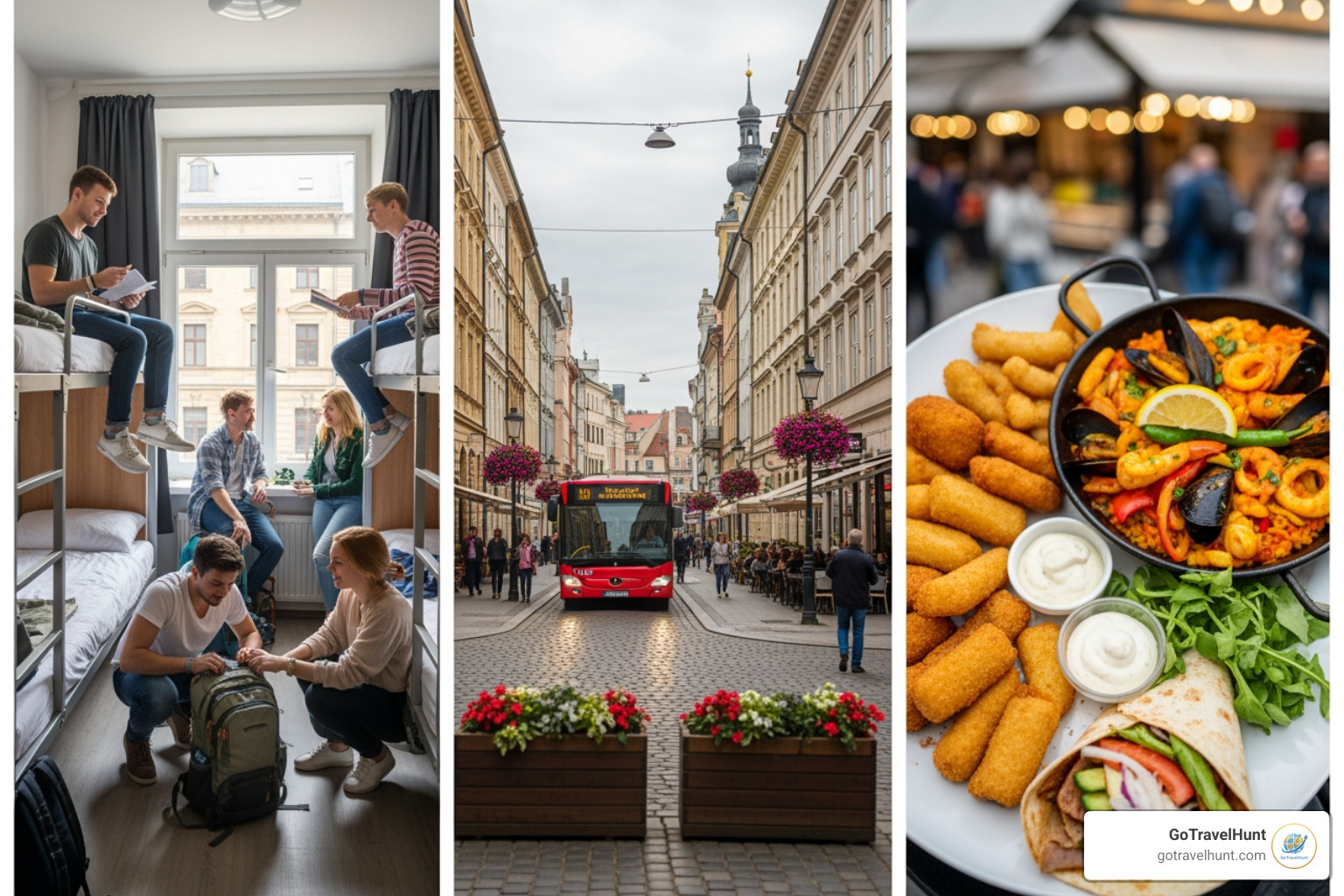
Once your blueprint is in place, it’s time to tackle the “big three” expenses: transportation, accommodation, and food. With the right approach, you can dramatically cut costs in all three areas. This is where a solid budget travel guide proves its worth.
Finding Affordable Flights and Transportation
Flights are often the biggest budget item, but smart strategies can cut costs in half. Book at least a month ahead for domestic flights and several for international. Flying midweek (Tuesdays, Wednesdays) is often cheaper than on weekends.
Use flight comparison tools that search across multiple airlines, including budget carriers. The “flexible dates” feature is a lifesaver for spotting the cheapest days to fly. For short hops within Europe, budget airlines offer incredible value, but read the fine print on fees for bags and seat selection. Packing light with just a carry-on is a great way to save money and time.
More info about Cheap Flight Deals
Once you land, public transport is your best friend. Buses, trams, and metros are far cheaper than taxis. A multi-day transit pass often costs less than a single cab ride. For travel between cities, buses and trains usually beat flying for cost and convenience on shorter routes. An overnight journey saves on both transport and a night’s accommodation.
A Budget Travel Guide to Affordable Accommodation
Affordable lodging options have exploded in recent years. Modern hostels offer everything from dorms ($20-34/night) to private rooms that rival budget hotels. The social atmosphere and communal kitchens—perfect for cooking your own meals—are huge perks.
Guesthouses and homestays provide a genuine local perspective at prices that undercut chain hotels. For groups or longer stays, renting an apartment can be cost-effective, especially with a kitchen. For the truly adventurous, house-sitting offers free accommodation in exchange for pet and property care.
More info about our Hotel Deals Finder
When considering shared accommodation, always read recent reviews and look for places with secure lockers. Your safety should never be compromised to save a few euros.
Eating Well Without Breaking the Bank
Food is one of the easiest areas to save money while still eating deliciously. Shop at local markets and supermarkets for fresh bread, cheese, and fruit. An impromptu picnic in a park can be more memorable and far cheaper than a restaurant meal.
Having access to a kitchen is a game-changer. Preparing just breakfast and a few dinners can save over €100 on a week-long trip. When you do eat out, street food and small local eateries offer the best value and authenticity. Avoid restaurants on main tourist squares; walk a few blocks away, and prices often drop by 30-50%.
Many European restaurants offer lunch specials that provide a multi-course meal for a fraction of dinner prices. Finally, carry a reusable water bottle. In most of Europe, tap water is safe and free, saving you money and reducing plastic waste.
Find local food tours
Top Budget-Friendly Destinations in Europe
Europe can be perceived as expensive, but a good budget travel guide reveals numerous destinations that offer incredible value. We focus on “on-the-ground costs”—daily spending on food, accommodation, and activities.
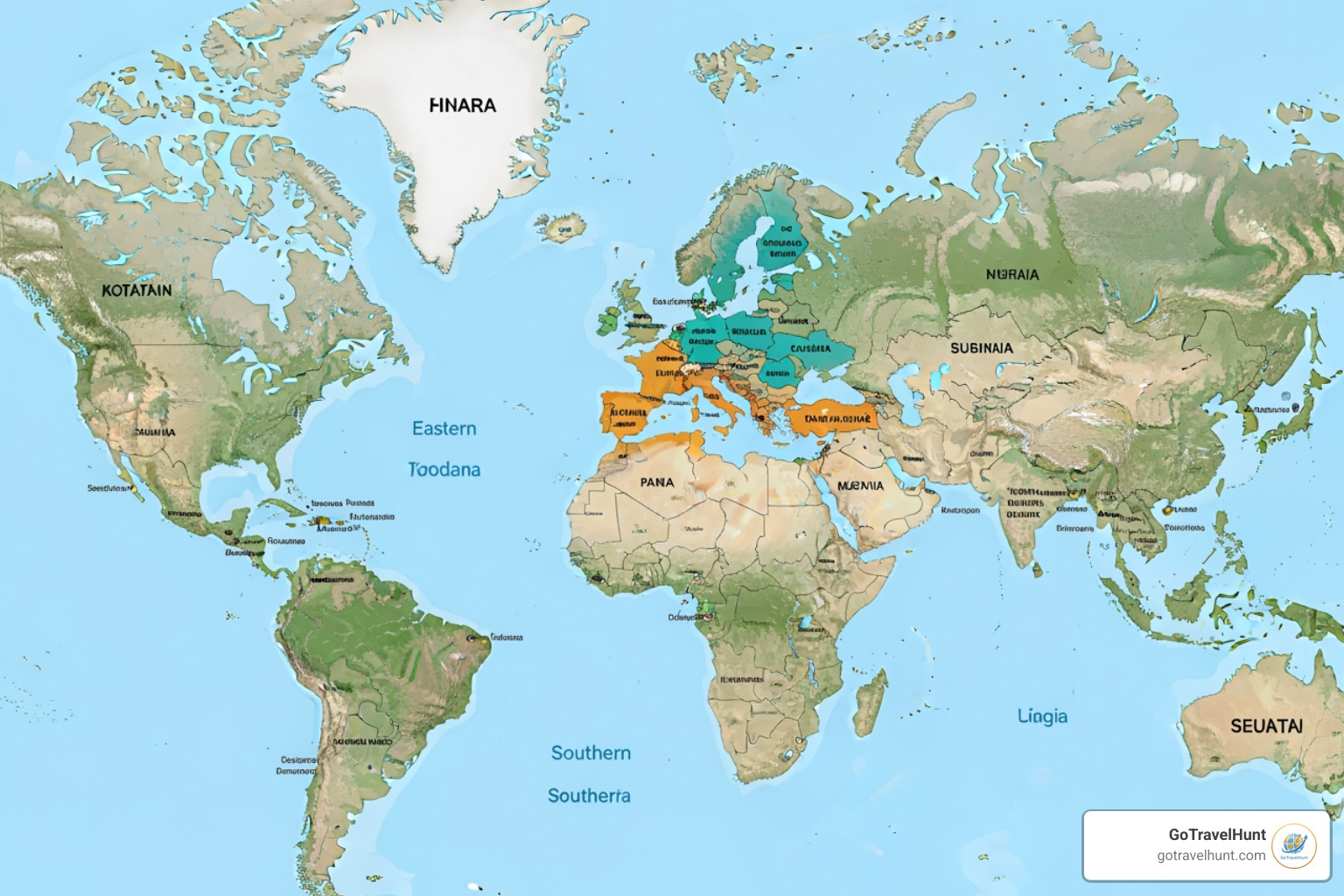
Unbeatable Value in Eastern & Southern Europe
These regions consistently offer the best value for travelers, as the cost of living is generally lower than in Western Europe.
Here are some top budget destinations in Europe, with approximate daily budgets:
- Poland: ≈£20/€22/$24 USD per day. Explore beautiful cities like Krakow and Warsaw.
- Albania: ≈£25/€28/$30 USD per day. A hidden gem with stunning coastlines and ancient ruins.
- Romania: ≈£18/€21/$23 USD per day. Find medieval towns and the legendary Transylvania.
- Hungary: ≈£23/€25/$27 USD per day. Budapest is an especially attractive and affordable hub.
- Georgia: ≈£21/€23/$25 USD per day. Explore ancient monasteries and the stunning Caucasus mountains.
- Portugal: ≈€30 per day. One of the cheapest countries in the Eurozone, with beautiful beaches and cities.
- Italy (Southern Regions): ≈€30 per day. Explore Naples, Puglia, or Sicily for authentic food and landscapes at a lower cost.
These destinations prove that experiencing Europe’s culture and landscapes doesn’t require a hefty budget.
- More info about What to Pack for a Europe Trip
- Check out our guide to the Best European City to Visit Alone
Exploring Major European Cities on a Budget
Even expensive cities like Paris, London, and Vienna can be budget-friendly with the right strategy.
- Paris: Enjoy a picnic by the Seine instead of a pricey restaurant. Many sights, like strolling through Montmartre, are free. The Louvre has free entry on the first Saturday evening of each month.
- London: Take advantage of free world-class museums like the British Museum, the National Gallery, and Tate Modern. Watch the Changing of the Guard or explore Hyde Park for free.
- Vienna: Visit St. Stephen’s Cathedral and the Schönbrunn Palace Gardens for free. Find affordable delicacies at markets like Naschmarkt.
- Edinburgh: Hike up Arthur’s Seat for panoramic views or visit free museums like the Scottish National Gallery of Modern Art.
The key is to accept free attractions, use public transport, and eat like a local.
Advanced Budget Travel: Earning, Ethics, and Essential Tools
Mastering the budget travel guide approach means understanding our impact, sustaining longer adventures, and using the right tools. This is about traveling in a way that enriches both our lives and the communities we visit.

How to Be a Responsible and Ethical Budget Traveler
Budget travel comes with responsibilities. Traveling responsibly doesn’t have to cost more; it just requires being intentional.
Support local businesses like family-run guesthouses and small restaurants. This ensures your money stays within the community. When it comes to paying fair prices, haggling too hard over a small amount can negatively impact a local’s livelihood. A few extra euros that barely affect your budget can make a real difference to them.
Environmental responsibility often aligns with budget travel. Choosing overland travel by bus or train reduces your carbon footprint compared to flying. Carry a reusable water bottle to save money and reduce plastic waste.
Finally, acknowledge your privilege. The ability to travel is a freedom many don’t have. Approaching destinations with humility and respect costs nothing but means everything.
- Learn about the impact of flying
Funding Your Adventures: How to Earn Money on the Road
What if your trip didn’t have to end when your savings ran out? Earning money while traveling can turn short holidays into long-term adventures.
Freelancing and remote work have revolutionized travel. If you’re a writer, designer, or programmer, you can work from anywhere with WiFi. Many European countries now offer digital nomad visas for remote workers.
Work exchange programs like Workaway or WWOOF offer another approach. Hosts provide free accommodation and meals in exchange for a few hours of work per day, such as helping at a hostel or on an organic farm. This eliminates accommodation costs, often the biggest travel expense.
Teaching English is another reliable option, particularly in Eastern Europe. Working holiday visas also exist for younger travelers from certain countries, allowing for seasonal work.
- More info about Working Abroad
Avoiding Hidden Fees and Using the Right Tools
Carefully planned budgets can be derailed by hidden fees. With the right tools, these are avoidable.
Foreign transaction fees from standard credit cards can add up. Get a travel-friendly credit or debit card that waives these fees. When paying by card, always choose to pay in the local currency to avoid poor exchange rates set by the merchant. Use a currency converter app to know what you’re actually spending.
- Check exchange rates with GoTravelHunt Currency Converter
Travel insurance is an expense you should never cut. It protects you from costly medical emergencies, theft, or trip cancellations. Think of it as protecting your entire travel investment for a small fraction of the cost.
Before any trip, check government travel advisories for current information on safety, local laws, and entry requirements.
- More info about European Travel Insurance
- GoTravelHunt Travel Safety Resources
Frequently Asked Questions about Budget Travel
Is budget travel only for young backpackers?
No, budget travel is a mindset, not an age bracket. The principles in this budget travel guide—like traveling in the shoulder season and choosing value-driven accommodation—work for everyone, whether you’re a solo traveler, a couple on a romantic getaway, or a family.
Modern hostels offer private rooms, and guesthouses or apartment rentals provide privacy for couples and families. The core principle is universal: spend intentionally on what matters to you and find smart savings elsewhere.
How do you stay safe when traveling on a budget?
Safety should never be sacrificed to save money. While budget options like hostels and public transport are generally safe in Europe, being smart is essential.
Always research neighborhood safety before booking. Read recent reviews on reputable booking platforms to get insights from other travelers. If staying in a hostel dorm, use the secure lockers provided. Trust your instincts—if a situation feels off, it’s worth paying more for a safer alternative.
Reliable travel insurance is non-negotiable. It protects you against medical emergencies, theft, and other unexpected situations. It’s an essential part of the travel budget, not an optional extra.
How do I balance saving money with actually enjoying my trip?
This is the heart of frugal travel. The key is to be intentional with your spending priorities.
Before your trip, identify your “must-do” experiences and budget for them without guilt. These are the memories that will define your trip. Then, look for savings on everything else. Do you need to eat at a restaurant for every meal, or would a picnic in a park be just as memorable? Do you need taxis, or can you experience the city like a local on the metro?
This approach frees you from penny-pinching. You’re making conscious choices about where your money creates the most value and joy. The goal isn’t to spend as little as possible; it’s to return with incredible experiences and no financial regrets.
Conclusion
At the end of our budget travel guide, we hope you feel inspired. A budget travel mindset isn’t about sacrifice; it’s about making smart, intentional choices that open up more possibilities.
We’ve seen how strategic planning, traveling in the shoulder season, and choosing the right accommodation can turn a dream trip into a reality. We’ve learned that world-class experiences are available in affordable destinations like Eastern Europe, and even pricey cities like Paris become accessible with the right approach.
Budget travel teaches us to focus on what truly matters: connections, culture, and breathtaking moments. It’s choosing a memorable picnic over an expensive meal or making new friends in a hostel common room. The world is more accessible than most people think.
Remember to travel responsibly, spend on what matters to you, and save on what doesn’t. The goal is to create unforgettable memories without financial stress.
Ready to turn these ideas into your own frugal-but-fabulous journey? GoTravelHunt is here to help you every step of the way.
Start planning your next adventure with our travel guides

Your adventure is waiting. And it’s more affordable than you think.