Planning a trip can feel complicated when you have to compare destinations, prices, transportation, accommodation, documents, and activities at the same time. A simple planning process can make those decisions much easier.
This guide breaks trip planning into practical steps you can follow in order, whether you are organizing a weekend getaway or a longer international trip. It also highlights which details should be checked with official sources before you book, especially entry requirements, passports, visas, and health information.
Quick trip-planning checklist: Choose your destination and travel dates → set a budget → check entry requirements → compare transportation → choose accommodation → create a flexible itinerary → arrange insurance and documents → pack and complete final checks.
1. Choose Your Destination and Travel Dates

Choosing the right destination starts with matching the trip to your budget, available time, interests, and preferred travel style. Before booking anything, decide what type of experience you want, such as a city break, beach holiday, cultural trip, nature escape, or family vacation.
Next, think about how much time you actually have. A short trip usually works better with a destination that is easy to reach and does not require long transfers. If you have more time, you can consider longer-distance destinations or a multi-city itinerary.
Your travel dates are just as important as the destination. Check the typical weather, seasonal conditions, local holidays, major events, and expected crowd levels before choosing your dates. Peak seasons may offer ideal conditions but often come with higher prices and more visitors, while shoulder seasons can sometimes provide a better balance between weather, cost, and availability.
If your dates are flexible, compare several departure and return dates before making a final decision. Even a small change in timing can affect flight prices, accommodation availability, and how busy a destination feels.
Before moving to the next step, you should be able to answer four basic questions:
- Where do you want to go?
- When do you want to travel?
- How long will the trip be?
- What type of trip are you planning?
Once these decisions are clear, it becomes much easier to build a realistic travel budget and continue planning the rest of your trip.
2. Set a Realistic Travel Budget
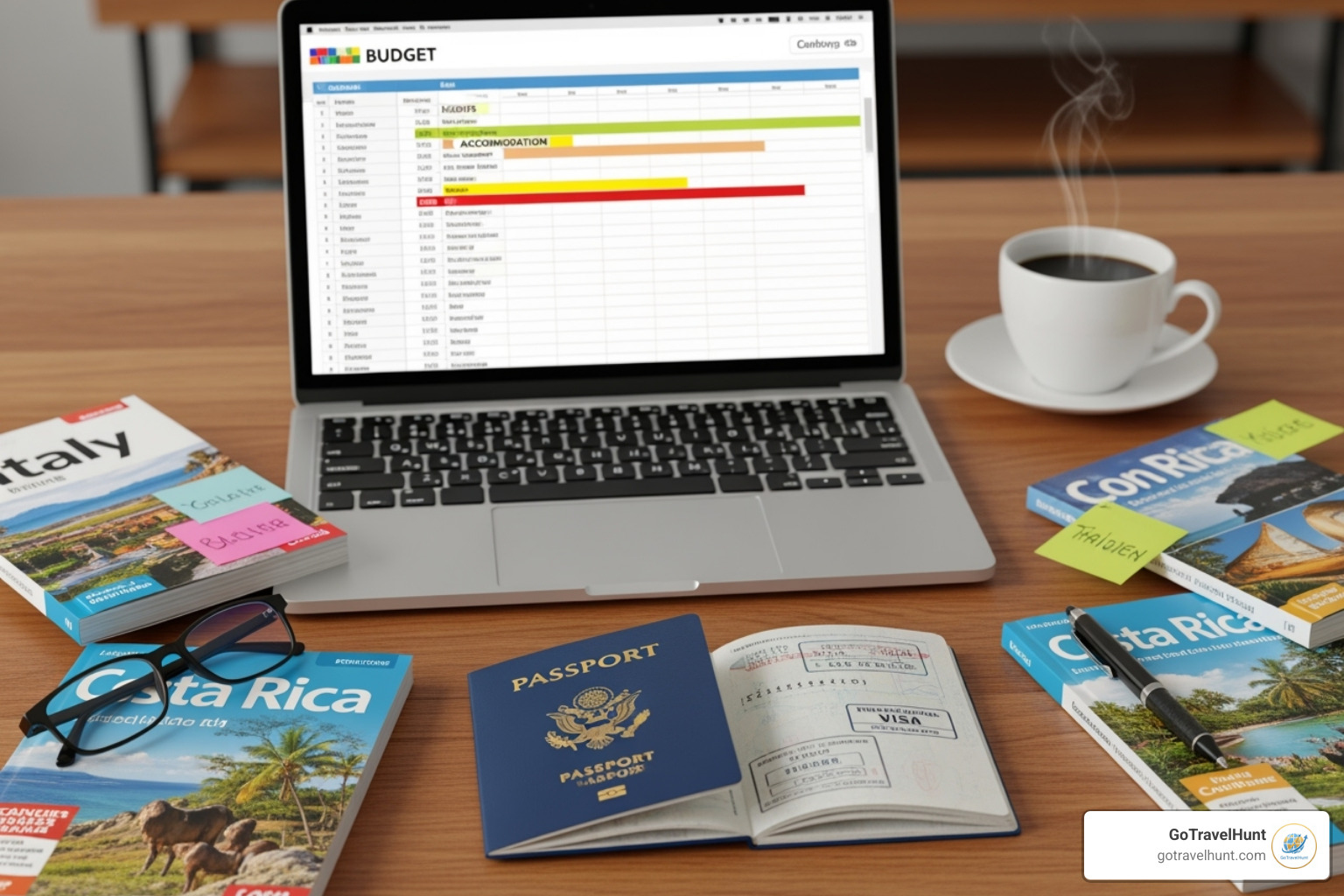
A realistic travel budget helps you make better decisions before you start booking. Instead of choosing flights, hotels, and activities separately, estimate the full cost of the trip first so you know what is affordable.
Start by dividing your expected expenses into the main categories:
- Transportation to and from your destination
- Accommodation
- Local transportation
- Food and drinks
- Attractions, tours, and activities
- Travel insurance
- Visa or entry fees, if applicable
- Baggage, airport transfers, and other extra charges
- Emergency or unexpected expenses
Research approximate prices for each category before setting a final budget. Costs can vary significantly depending on the destination, season, trip length, and travel style.
It is also useful to separate essential expenses from optional spending. Flights, accommodation, documents, and basic transportation are usually fixed priorities, while restaurant choices, shopping, premium activities, and upgrades are more flexible.
Add a small contingency amount to your budget for unexpected costs. Delays, transportation changes, additional baggage fees, or last-minute expenses can happen even on a well-planned trip.
A simple spreadsheet or budgeting app can make this process easier. Record your estimated cost for each category, then update it as you make bookings. This helps you see how much of your budget remains before you travel.
Before moving to the next step, make sure you know:
- Your maximum total trip budget
- Your expected transportation cost
- Your accommodation budget per night
- Your approximate daily spending allowance
- How much you want to keep aside for unexpected expenses
Once your budget is clear, you can check the travel documents and entry requirements for your destination without making bookings that may later need to be changed.
3. Check Passport, Visa, Health, and Entry Requirements
Before booking non-refundable travel, check the official entry requirements for your destination. Passport, visa, health, and immigration rules can vary depending on your nationality, destination, length of stay, and purpose of travel.
Start by checking your passport. Make sure it will remain valid for the required period and that it has enough blank pages if your destination requires them. Do not rely on general travel blogs for passport validity rules, because requirements can change.
Next, confirm whether you need a visa, electronic travel authorization, visa on arrival, or another type of entry permission. Always verify this information through the destination country’s official immigration website, embassy, or consulate.
You should also review any health requirements or recommendations before traveling. Depending on the destination, this may include vaccinations, health certificates, medication rules, or other entry-related health documents.
If you take prescription medication, check whether there are restrictions on bringing it into the country. Some destinations have specific rules about certain medicines, quantities, or supporting documents.
Travel insurance is also worth considering before your trip. Policies can differ significantly, so compare what is actually covered, including medical emergencies, cancellations, delays, baggage problems, and any activities you plan to do.
Before continuing with your trip planning, confirm:
- Your passport meets the destination’s requirements
- You understand the current visa or entry rules
- You have checked official health guidance
- Any medication you carry is permitted
- You understand what your travel insurance does and does not cover
- You have saved copies of important travel documents
Because entry and health requirements can change, check official government sources again shortly before departure.
4. Compare Transportation Options

Transportation can take a large part of your travel budget, so compare several options before booking. The best choice depends on price, total travel time, convenience, baggage rules, and how easily you can reach your final destination.
For flights, compare prices across different dates and airports when possible. Look beyond the base ticket price and check the total cost after baggage, seat selection, payment fees, and airport transfers are added.
If airfare is a major part of your budget, our flight fare finder guide can help you compare prices and look for better booking options.
If you are traveling between nearby cities or countries, also compare trains, buses, ferries, or driving. A flight may look faster, but airport security, check-in time, and transfers can make ground transportation more practical for some routes.
When comparing options, consider:
- Total ticket price
- Baggage allowance and extra fees
- Departure and arrival times
- Travel duration
- Number of connections or transfers
- Distance from the airport or station to your accommodation
- Cancellation and change conditions
- Reliability and convenience for your itinerary
Avoid choosing transportation based only on the lowest advertised price. A cheaper option may become more expensive after adding luggage, transfers, or an overnight stay caused by inconvenient travel times.
Once you find a suitable option, review the booking details carefully before paying. Check the passenger names, dates, airports or stations, baggage conditions, and cancellation rules.
Save your booking confirmation after purchase and keep it somewhere easy to access during your trip.
5. Choose the Right Accommodation
Choosing the right accommodation is about more than finding the lowest nightly rate. Location, comfort, cancellation terms, transportation access, and the type of trip you are planning can all affect the overall value.
Start by deciding which type of accommodation fits your needs. Hotels may be convenient for shorter stays, while apartments or vacation rentals can offer more space and kitchen facilities for longer trips or families.
When comparing places to stay, consider:
- Total price, including taxes and additional fees
- Location and distance from the places you plan to visit
- Access to public transportation
- Recent guest reviews
- Check-in and check-out times
- Cancellation and refund policies
- Wi-Fi, air conditioning, parking, or other amenities you need
- Safety and accessibility of the surrounding area
Location can have a major impact on your trip. A cheaper room far from the city center may require more time and money for daily transportation, while a more expensive central option may offer better overall value.
Read recent reviews carefully and look for repeated comments rather than focusing on a single positive or negative review. Pay particular attention to cleanliness, noise, location, staff communication, and whether the listing matches the description.
Before booking, review the final price and all conditions. Some properties may charge additional cleaning fees, resort fees, deposits, or local taxes that are not obvious in the initial search price.
Once you book your accommodation, save the confirmation, full address, check-in instructions, and contact details so they are easy to access during your trip.
6. Build a Flexible Travel Itinerary
A good travel itinerary should give your trip structure without making every hour feel scheduled. The goal is to organize the most important activities while leaving enough time for rest, delays, and unexpected discoveries.
Start by listing the places and activities that matter most to you. Separate them into three groups:
- Must-do activities
- Nice-to-have activities
- Optional activities if time allows
Next, group attractions by location. Visiting places that are close to each other on the same day can save time and reduce unnecessary transportation.
Avoid planning too many major activities in one day. Allow time for meals, transportation, queues, breaks, and unexpected changes. A realistic itinerary is usually more enjoyable than trying to fit every attraction into a short trip.
For popular attractions, tours, restaurants, or events that may sell out, consider booking in advance. Keep less important activities flexible so you can adjust your plans if the weather changes or you find something more interesting.
When building your itinerary, check:
- Opening days and hours
- Advance booking requirements
- Travel time between locations
- Public transportation schedules
- Expected weather
- Local holidays or events
- Any accessibility needs
It can also help to keep all your reservations, addresses, ticket details, and daily plans in one place, such as a notes app, calendar, spreadsheet, or travel itinerary app.
Before your trip, review the itinerary once more and remove anything that makes the schedule feel rushed. A flexible plan should help you enjoy your destination, not make you feel like you are completing a checklist.
7. Prepare Travel Documents, Insurance, and Packing

Before departure, organize your important documents and make sure you can access them easily during the trip.
Keep copies of essential documents such as:
- Passport
- Visa or travel authorization, if required
- Flight, train, or bus confirmations
- Accommodation bookings
- Travel insurance policy
- Important medical information or prescriptions
- Tickets for pre-booked attractions or activities
It is useful to keep both digital and physical copies of important documents. Store digital copies securely on your phone or cloud storage, and keep physical copies separate from the originals where practical.
Review your travel insurance policy before departure so you understand what is covered, what is excluded, and how to contact the insurer if you need assistance.
For packing, start with the essentials and pack according to the destination, weather, trip length, and planned activities. Check your airline or transportation provider’s baggage rules before you travel to avoid unexpected fees.
You can also use our travel items checklist to organize what you need before departure.
Your packing list may include:
- Clothing suitable for the expected weather
- Comfortable shoes
- Toiletries and personal items
- Prescription medication in its original packaging
- Chargers and travel adapters
- Power bank
- Basic first-aid items
- Copies of important documents
Avoid packing too many items “just in case.” Choosing clothes that can be mixed and matched can reduce luggage weight and make transportation easier, especially on multi-city trips.
Before closing your bag, check that your most important items — passport, wallet, phone, medication, tickets, and booking details — are easy to reach.
8. Complete Your Final Pre-Trip Checks
In the final days before departure, review the most important details of your trip so you can catch any last-minute problems before they become expensive or stressful.
Start by confirming your transportation and accommodation bookings. Check the dates, departure times, terminals or stations, addresses, and check-in instructions.
Review the latest official entry requirements for your destination again, especially if you booked the trip several weeks or months earlier. Visa, health, and immigration rules can change, so your final check should always rely on current official sources.
Before leaving, confirm:
- Your passport and required travel documents are packed
- Your visa or travel authorization is still valid, if required
- Your transportation bookings are confirmed
- Your accommodation details are saved
- Your travel insurance information is accessible
- Your phone, chargers, and travel adapter are packed
- Your medication is packed correctly
- You have access to emergency contact information
- You have enough payment options for the trip
- Your luggage meets the carrier’s size and weight rules
It is also useful to save important addresses and booking confirmations for offline access in case you lose internet connectivity.
Check the weather forecast shortly before departure and adjust your clothing or travel plans if necessary.
If you will be away from home for several days, make any final arrangements for pets, plants, mail, bills, or home security before leaving.
A short final review can help you start your trip with fewer surprises and make the rest of your travel planning more useful.
9. Frequently Asked Questions About Planning a Trip
How far in advance should I start planning a trip?
There is no single planning timeline that works for every trip. The right time to start depends on the destination, season, trip length, visa requirements, transportation availability, and how flexible your dates are.
International trips, peak-season travel, major events, and destinations that require visas may need more preparation. Short domestic trips can often be planned with less lead time.
The important thing is to check any time-sensitive requirements first, especially passports, visas, entry rules, and transportation availability.
What should I book first when planning a trip?
Start by confirming your destination, dates, budget, and entry requirements before making non-refundable bookings.
Transportation and accommodation are usually the first major reservations to compare. After those are confirmed, you can plan attractions, tours, restaurants, and other activities around your final schedule.
If a particular event or attraction is the main reason for your trip, check its availability before booking the rest of your itinerary.
How can I plan a trip without overscheduling it?
Prioritize the activities that matter most and leave free time between them.
Instead of trying to visit every attraction, group nearby places together and allow extra time for transportation, meals, queues, weather changes, and rest.
A flexible itinerary gives you a plan while still allowing you to change your schedule during the trip.
How can I keep my travel costs under control?
Set a maximum total budget before booking and divide it into categories such as transportation, accommodation, food, activities, insurance, and local transportation.
Compare the total cost of each option rather than only the advertised price. Baggage fees, taxes, airport transfers, deposits, and other charges can significantly change the final cost.
Tracking your confirmed expenses in a spreadsheet or budgeting app can help you see how much money remains before departure.
Where should I check visa and entry requirements?
Use official government sources whenever possible. Depending on the destination, this may include an immigration authority, embassy, consulate, health authority, or official government travel website.
Avoid relying exclusively on blogs, social media posts, or old forum discussions for entry requirements because rules can change.
Check the requirements when you begin planning and verify them again shortly before departure.
Do I need travel insurance for every trip?
Travel insurance needs vary depending on the trip, destination, existing coverage, cost of your bookings, and activities you plan to do.
Before purchasing a policy, review the coverage limits, exclusions, cancellation terms, medical coverage, baggage protection, and any restrictions related to activities or pre-existing conditions.
The important thing is to understand exactly what a policy covers rather than assuming all travel insurance provides the same protection.
What is the easiest way to organize a trip?
Keep your essential information in one place.
You can use a notes app, spreadsheet, calendar, travel-planning app, or a combination of these to organize booking confirmations, addresses, transportation details, activity reservations, and important documents.
A simple system that you can easily access during the trip is usually more useful than a complicated planning setup.
10. Travel Planning Checklist
Use this checklist before you finalize your trip:
- Choose your destination
- Confirm your travel dates
- Decide how long the trip will be
- Set a realistic total budget
- Check passport validity
- Check visa and entry requirements
- Review official health and travel guidance
- Compare transportation options
- Check baggage rules and extra fees
- Book suitable accommodation
- Review cancellation and refund policies
- Create a flexible itinerary
- Book any essential attractions or activities
- Consider appropriate travel insurance
- Organize booking confirmations and important documents
- Prepare any required medication or prescriptions
- Check the weather before packing
- Save important addresses and confirmations for offline access
- Confirm transportation and accommodation shortly before departure
- Complete a final document and luggage check before leaving
Final Thoughts
Planning a trip becomes much easier when you break the process into clear steps. Start with your destination and budget, verify important requirements through official sources, compare your booking options carefully, and keep your itinerary flexible.
You do not need to plan every minute of your trip. The goal is to organize the important details in advance so you can spend less time dealing with avoidable problems and more time enjoying your destination.
Use this travel planning guide as a checklist whenever you organize a new trip, and always recheck time-sensitive information such as entry requirements, health guidance, transportation schedules, and booking conditions before departure.
11. Official Travel Resources
Travel requirements can change, so always verify important information with official sources before departure. The following resources can help you check current entry rules, health guidance, and destination-specific travel information:
- Destination immigration authority or embassy: Always use the official immigration, embassy, or consulate website of the country you plan to visit for current visa and entry requirements.
- World Health Organization (WHO): For international travel health information and guidance.
- CDC Travelers’ Health: For destination-specific health information and travel notices.
- UK Foreign Travel Advice: For country-by-country information covering entry requirements, safety, health, and local laws.
Requirements may also depend on your nationality and personal circumstances, so confirm that the guidance applies specifically to you before making travel decisions.
World Health Organization (WHO) → WHO Travel and Health
CDC Travelers’ Health → CDC Destinations
UK Foreign Travel Advice → UK Foreign Travel Advice