
Budget Family Travel Tips: Unlock 5 Quick Wins
Why Budget Family Travel Tips Matter More Than Ever
Budget family travel tips are essential for creating unforgettable memories without draining your savings. With smart planning, you can significantly reduce vacation expenses while still enjoying incredible experiences together.
Quick Budget Family Travel Tips:
- Travel Off-Season – Save up to 50% on flights and accommodations.
- Book Accommodations with Kitchens – Prepare meals to cut food costs dramatically.
- Pack Snacks and Water Bottles – Avoid expensive café and convenience store purchases.
- Choose Destinations Wisely – Target locations with lower costs of living.
- Accept Free Activities – Parks, beaches, and walking tours cost nothing.
- Travel Slowly – Fewer destinations mean lower transportation costs.
- Use Public Transportation – It’s budget-friendly and authentic.
- Set a Daily Food Budget – A per diem helps control spending without worry.
The challenge many families face is that travel costs feel overwhelming, from flight prices doubling during holidays to expensive multi-room hotel bookings. However, these obstacles are manageable with the right approach.
This guide provides actionable strategies to help you plan affordable family adventures. You’ll learn how to choose cost-effective destinations, find creative accommodation, manage food expenses, and find free activities that create lasting memories.
I’m Ramy Saber, founder of GoTravelHunt. My goal is to help families like yours turn travel dreams into affordable reality through practical, tested strategies based on smart planning and flexibility.
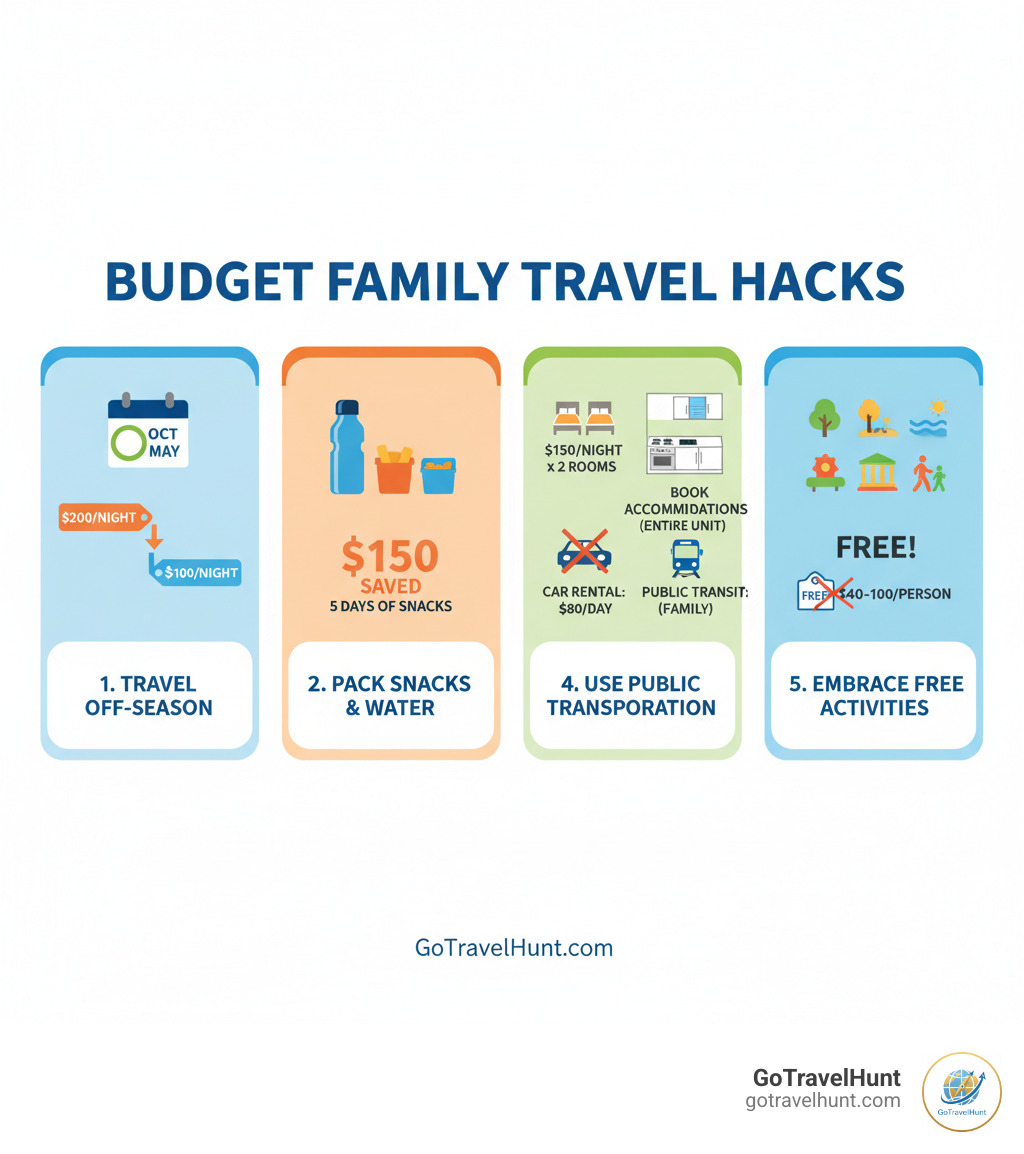
This infographic shows 5 quick wins for budget family travel: 1) Travel Off-Season with calendar showing shoulder season dates and price comparison (peak: $200/night vs off-season: $100/night), 2) Pack Snacks with images of reusable water bottles and containers showing $150 saved over 5 days, 3) Book Kitchens with side-by-side comparison of hotel rooms ($150/night x 2 rooms) vs apartment with kitchen ($180/night, one unit), 4) Use Public Transport with cost breakdown (rental car + gas + parking: $80/day vs public transit: $15/day for family), 5) Find Free Activities with icons of parks, beaches, free museum days, and walking tours vs paid attractions ($40-100 per person)
Budget family travel tips basics:
- best travel tips for families
- how to travel with kids
- travel insurance for children
The Foundation: Planning Your Affordable Family Adventure
Every great family adventure starts with a solid plan. The secret to memorable, affordable travel is understanding what you can afford and making every euro count.
The first step is creating a realistic budget. Financial experts suggest most families spend 5-10% of their annual income on vacation. For a household earning €40,000 per year, that’s a €2,000 to €4,000 travel fund. This number becomes your guide for every decision. Once you know your total budget, prioritize what matters most to your family. If a specific museum is a “must-have,” budget for it first and find free alternatives for other days.
Your destination choice dramatically impacts your bottom line. Research the local cost of living and consider exchange rates. Countries where your money stretches further mean more experiences for the same budget. For European families, this might mean choosing countries where the euro has strong purchasing power or exploring less-traveled regions. Instead of staying in the heart of Paris, consider a charming French town with similar culture at lower prices. Proximity to home is another smart consideration; road trips eliminate flight costs and give you control over your schedule. Where to Travel With Kids offers destination ideas that balance accessibility with adventure.
Timing is one of the most powerful budget family travel tips. Flight and accommodation prices often double during school holidays. By shifting your trip to the off-season or shoulder season (just before or after peak times), you’ll find significantly lower prices, fewer crowds, and a more authentic local experience. Great Places for Family Vacations can help you find destinations that offer incredible value.
A budget is only useful if you track it. A simple spreadsheet with columns for accommodations, transportation, food, and activities works perfectly. As you plan and travel, record your spending. A key principle is giving every euro a purpose. Set a daily food budget (per diem) to remove the stress of constant calculation. For a family of four in Europe, you might budget €50-€70 per day, adjusting for your destination. Also, allocate funds for must-do activities before you leave to ensure your priorities are covered.
Involving older children in budgeting teaches valuable life skills. Give them a small budget for souvenirs and let them manage it. They’ll learn to make choices, compare prices, and understand that money is finite, which also reduces the “can we buy this?” requests.
Slashing Major Costs: Smart Savings on Transportation & Stays
Once you have a plan, it’s time to tackle the two biggest expenses: getting there and having somewhere to sleep. With strategic thinking, we can save hundreds or even thousands of euros.

Transportation costs vary wildly. A family of four flying from Venice to Barcelona might spend €380 on a budget airline, but that could triple during peak season. The difference often comes down to flexibility with travel dates. For European families, driving can be more economical for shorter distances and larger families, eliminating baggage fees. For longer journeys, a well-timed flight might save money and time. Always calculate the total cost: fuel, tolls, and parking versus flight tickets and baggage fees.
Once at your destination, public transportation is often your best friend. A bus ride in Barcelona costs around €1 per person, while a rental car involves daily fees, fuel, and parking charges that can exceed €30 per day in city centers. Cities like Paris and Rome have excellent, budget-friendly transit systems.
Securing affordable transportation requires patience. Compare prices across multiple platforms and directly on airline websites. Setting up price alerts is a brilliant tip that lets technology notify you when prices drop. Another clever trick is the layover technique, where a long stopover allows you to visit a second destination for the price of one flight. Packing light is perhaps the most effective way to save money on flights, especially with budget carriers that charge for every extra. By mastering carry-on-only travel, you can avoid fees that could easily total €200-300 for a family. More Family Travel Tips
Creative accommodations offer even bigger savings. The game-changer is simple: book places with kitchens. When you can prepare even half your meals, the savings stack up. Vacation rentals have transformed family travel, often costing less than two cramped hotel rooms while providing a kitchen, laundry, and more space.
| Feature | 2 Hotel Rooms (4 people) | 1 Two-Bedroom Apartment (4 people) |
|---|---|---|
| Cost (per night) | €140+ (€70/room x 2) | €100-€180 |
| Space | Limited, separate rooms | Ample, shared living areas, separate bedrooms |
| Amenities | No kitchen, small fridge, limited laundry | Full kitchen, often laundry facilities, more privacy |
| Meal Savings | Minimal | Significant (cook own meals) |
Over a week, choosing an apartment could save €200-400 on lodging alone. Don’t overlook modern hostels with private family rooms, which offer a budget-friendly middle ground. House swapping is another ingenious solution. Through dedicated platforms, families pay an annual fee to swap homes, essentially getting free accommodation. For outdoor lovers, camping and glamping provide memorable adventures at a fraction of typical hotel costs.
Everyday Savings on the Go: Mastering Food & Fun
Even with affordable flights and accommodation, daily expenses like food and activities can quickly add up. Mastering these everyday savings is crucial for making our budget family travel tips effective.

Food expenses can quietly drain a travel budget. Our approach is to minimize restaurant meals without sacrificing good experiences. This means being strategic about when and where we spend our food money.
One of the easiest wins is packing reusable water bottles. In most European countries, tap water is safe and free. We refill our bottles throughout the day, saving money and reducing plastic waste. Snacks are another game-changer, especially with kids. We stock up on fruit, nuts, and crackers from local grocery stores to prevent expensive impulse buys near tourist attractions.
When we do eat out, eating lunch at restaurants and cooking dinner in our accommodation works beautifully. Many European restaurants offer affordable lunch menus. For dinner, we prepare a simple meal in our rental. Avoiding drinks at restaurants is another small change with big savings; we stick with free tap water. Exploring local grocery stores and markets is one of our favorite parts of traveling. We find fresh, affordable ingredients and get an authentic cultural experience.
For activities, some of the most memorable family experiences are completely free. Parks, beaches, and public spaces provide endless fun. Many cities also offer free museum days. Walking tours through historic neighborhoods cost nothing but our time and often provide the best insights.
Cooking simple meals like pasta or tacos in your accommodation can save hundreds of euros. Picnic lunches are another fantastic option, combining affordability with a memorable experience. We visit a local market for fresh bread, cheese, and fruit, then enjoy an outdoor meal in a beautiful park. These market visits have become cherished memories, teaching our kids about different foods and cultures.
Entertainment doesn’t have to be expensive. We always research free local events like concerts or festivals. City passes can be valuable, but only if you plan to visit many included attractions; otherwise, paying individually is cheaper. Even public transportation can be a sightseeing adventure, offering a ground-level view of a city for the price of a transit ticket. Finally, hiking and nature exploration provide rewarding free activities that create opportunities for families to bond. More tips on saving on food out west.
Pro-Level Budget Family Travel Tips and Tricks
Now it’s time for advanced strategies that can generate exceptional savings. These pro-level budget family travel tips are what separate occasional budget travelers from those who consistently travel for less.
The most powerful tool is flexibility. When we adjust plans based on deals rather than rigid preferences, everything changes. Being flexible with dates and even destinations opens doors to savings that aren’t available to inflexible travelers.
Slow travel addresses a huge budget drain: constant movement. Spending two weeks in one village instead of rushing through five cities means we pay for transportation once, not four times. We find the neighborhood bakery, learn the market days, and become temporary residents, which always saves money.
Smart packing directly impacts the bottom line. Versatile, layerable clothing means we can fit everything into carry-on luggage, avoiding checked baggage fees that can add €50-100 each way per person on budget airlines.
Technology has revolutionized finding travel deals. We rely on general strategies like monitoring prices over time, getting notified when costs drop, and comparing options across multiple platforms. Simple spreadsheets or budgeting apps can help track prices and manage spending.
Travel is unpredictable. A child gets sick, a flight is delayed, or weather forces a change of plans. Preparing for the unexpected is a fundamental part of responsible travel. Travel insurance protects from the catastrophic financial impacts of major problems like medical emergencies or trip cancellations. Find budget-friendly travel insurance through reliable providers.
Beyond insurance, we maintain a small emergency fund (€100-200) for minor unexpected expenses that don’t warrant a claim, like a taxi when a child is exhausted or replacing a broken charger. This buffer prevents small costs from creating stress.
Versatile clothing is the foundation of efficient packing. This approach means we need fewer items, which translates to fitting everything into carry-on luggage. Reusable items also deserve a permanent place in our packing list. Water bottles, shopping bags, and snack containers save money and reduce waste. A small first-aid kit with basic supplies prevents expensive pharmacy visits for minor issues.
Travel insurance is one of the wisest investments a traveling family can make. The peace of mind alone is worth the cost, but the financial protection is invaluable. Medical treatment abroad can be extraordinarily expensive without coverage. For families planning multiple trips, specialized options can provide ongoing coverage that’s more affordable than separate policies. Always read the policy carefully to understand what’s covered.
Frequently Asked Questions about Budget Family Travel
What is the best first step to planning a budget family vacation?
The first and most crucial step is to create a realistic budget. Financial experts recommend allocating 5-10% of your annual income for vacations. For a family earning €40,000, that’s a €2,000-€4,000 travel fund. This number provides a clear financial framework. Once you have your budget, prioritize what matters most to your family. This allows you to allocate funds strategically and make informed choices, which removes stress from the planning process.
How can families save the most money on a trip?
The biggest savings come from the “big three”: accommodations, transportation, and food. Opting for vacation rentals with kitchens is one of the most effective budget family travel tips. This provides more space and allows you to cook your own meals. For transportation, traveling during the off-season can cut flight costs in half. For food, preparing most of your own meals—cooking breakfast, packing picnic lunches, and making simple dinners—can reduce food costs by 60-70% compared to eating out for every meal.
Is it cheaper to drive or use other transportation for a family vacation?
It depends on your specific situation. For larger families traveling a few hundred miles within Europe, driving is often the most economical choice. You avoid per-person ticket costs and baggage fees. However, for longer distances or smaller families, a budget flight or train deal might be cheaper and save valuable vacation time. The key is to compare the total costs of each option. For driving, factor in fuel, tolls, and parking. For flights or trains, include baggage fees and transfers. Also, in many European cities, public transport is the cheapest and most efficient way to get around once you’ve arrived.
Conclusion
We’ve journeyed through essential budget family travel tips, from careful planning to everyday savings. The heart of affordable family travel isn’t about missing out—it’s about making thoughtful choices that let your money work harder for you.
The biggest wins come from smart decisions on major expenses: choosing destinations wisely, finding accommodations with kitchens, traveling in the shoulder season, and preparing your own meals. These strategies can turn a dream trip into a realistic plan.
Beyond the savings, travel is an investment in family memories. Shared adventures create bonds that strengthen your family in ways nothing else can.
Affordable travel is achievable for any family willing to plan ahead and stay flexible. You need information, strategy, and a willingness to prioritize experiences. At GoTravelHunt, our mission is to make these unforgettable journeys accessible. With these proven tips, you’re equipped to start planning your next adventure.
The world is waiting, and it’s more affordable than you think. Your family’s travel story starts now.
Explore our Best Vacation Spots guides to find your next affordable destination.