Family travel safety tips: 5 Ultimate Secure
Why Family Travel Safety Matters More Than Ever
Family travel safety tips are essential for keeping your loved ones secure and healthy while exploring. Whether on a road trip or an international flight, proactive measures can transform a stressful journey into a memorable adventure.
Quick Safety Essentials:
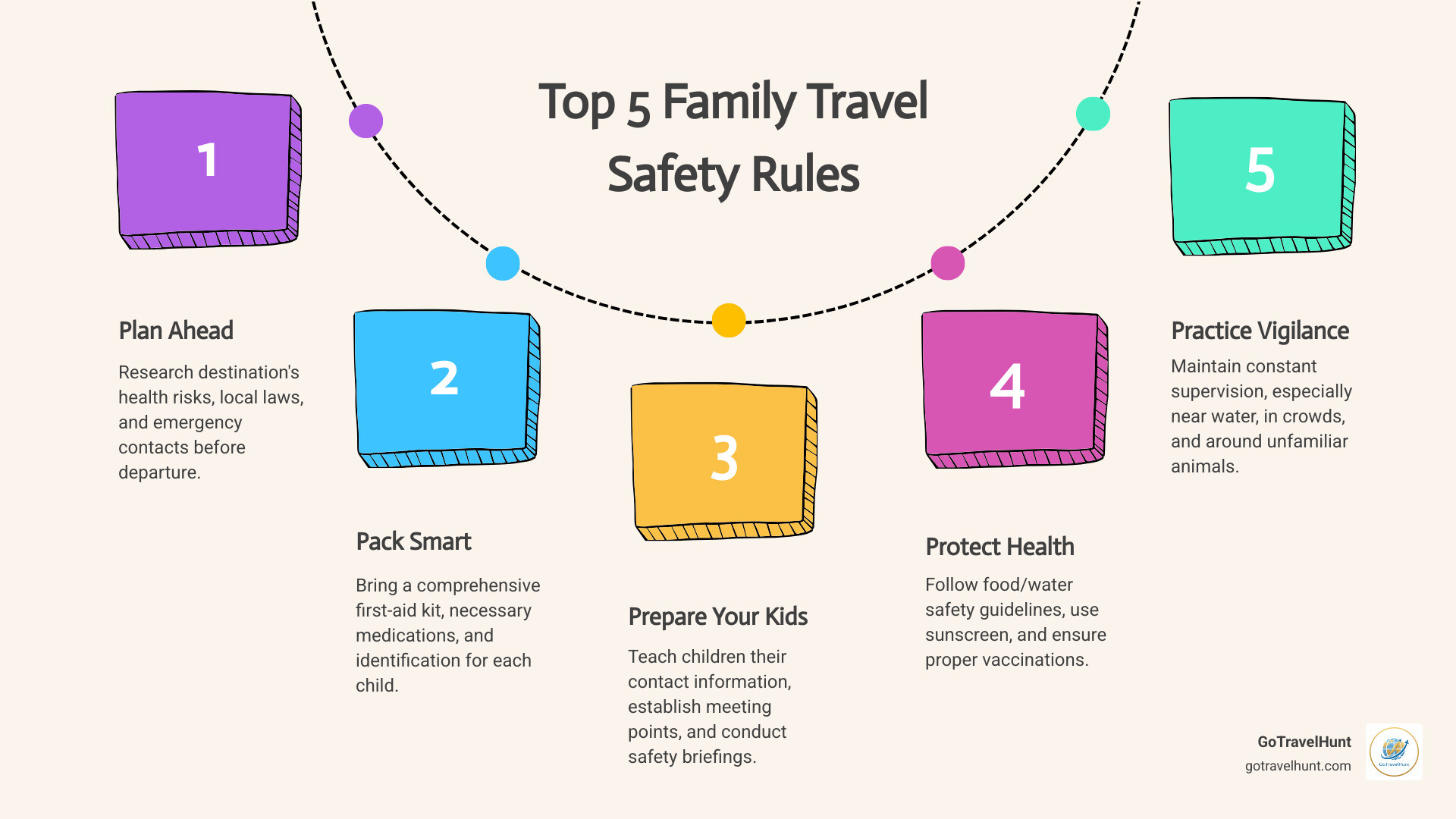
- Plan Ahead – Research your destination’s health risks, local laws, and emergency contacts before departure
- Pack Smart – Bring a comprehensive first-aid kit, necessary medications, and identification for each child
- Prepare Your Kids – Teach children their contact information, establish meeting points, and conduct safety briefings
- Protect Health – Follow food/water safety guidelines, use sunscreen, and ensure proper vaccinations
- Practice Vigilance – Maintain constant supervision, especially near water, in crowds, and around unfamiliar animals
The statistics underscore why these precautions matter: motor vehicle crashes are the leading cause of death among healthy travelers, car seats reduce fatal injury risk by 71% for infants, and drowning remains a major cause of death when traveling. Children face unique vulnerabilities—they dehydrate faster from diarrhea and develop altitude sickness more quickly.
I’m Ramy Saber, founder of GoTravelHunt. I’ve used my project management background to develop these practical family travel safety tips. At GoTravelHunt, we research and compile essential strategies that balance adventure with security, helping your family explore the world with confidence.
Basic family travel safety tips glossary:
- expense savings tips for traveling with your family out west
- best places to travel with toddlers
- traveling with infant
Pre-Trip Preparations: Your Foundation for Safe Travels
The secret to stress-free family travel begins before you pack. Pre-trip planning is where the most important family travel safety tips come into play, laying the groundwork for a safe and amazing adventure.
Start by researching your destination’s local customs, laws, and safety concerns. Check for any travel advisories and consider enrolling in programs like STEP (Smart Traveler Enrollment Program) for U.S. citizens, which registers your trip with the nearest embassy.
Next, get your documents in order. Check passport expiration dates, especially for children, as they expire after just 5 years (for kids 15 and under) and require a new application. Make physical and digital copies of all documents. For solo travel with a child, carry a notarized consent letter from the other parent.
Schedule an appointment with your healthcare provider at least 6 weeks before departure to allow time for any necessary vaccinations. This is crucial, as children’s developing immune systems are more vulnerable abroad. Discuss your itinerary to get custom advice and ensure routine vaccinations are current based on CDC guidance on routine childhood vaccinations. Some countries require proof of vaccination for entry.
Finally, pack smart. Beyond clothes, assemble a travel health kit and consider travel insurance for children for broader protection.
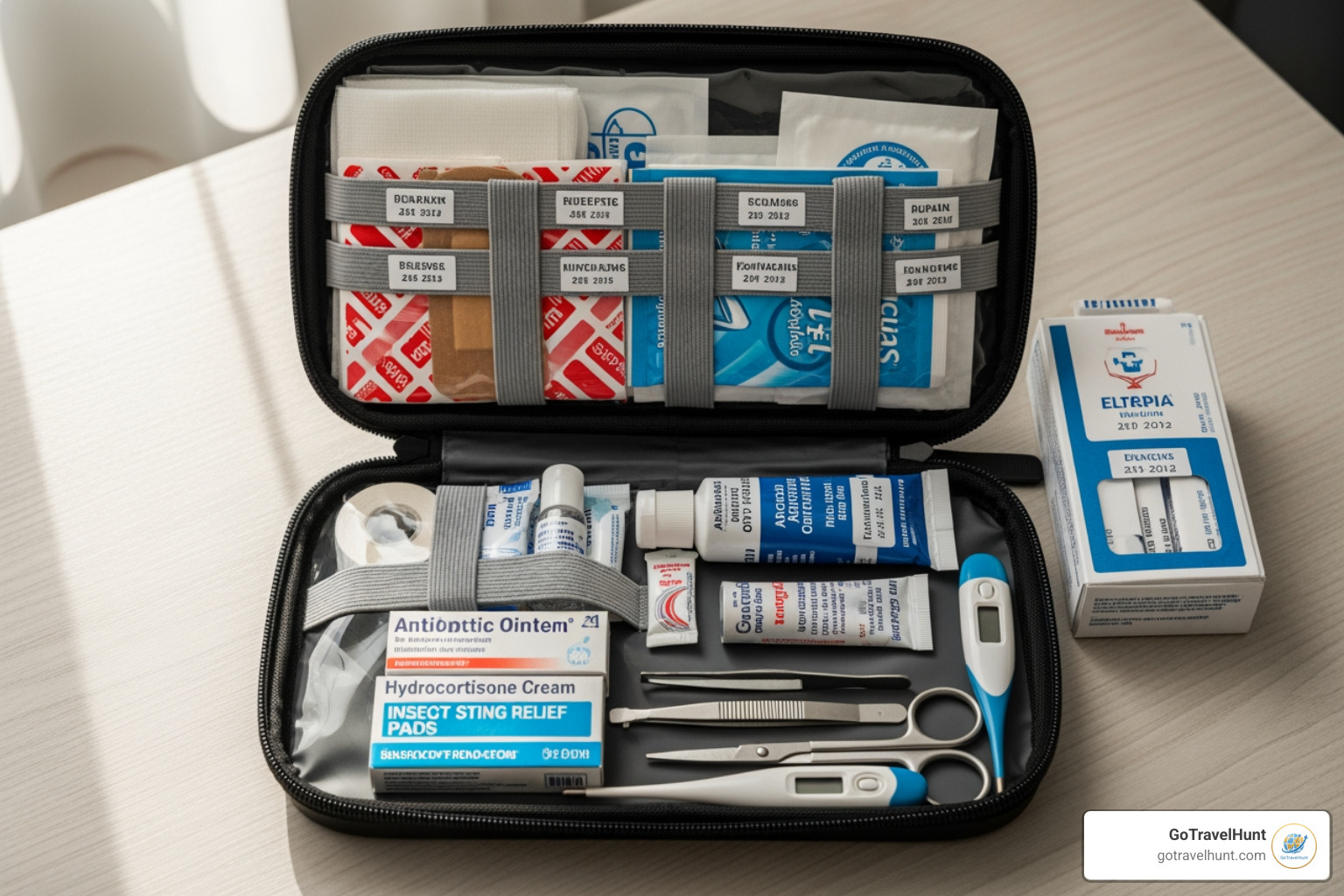
Pack a Comprehensive First-Aid Kit
A well-stocked first-aid kit is essential for handling minor health issues on the spot. Consider packing two kits: one for injuries and one for illness. Your kit should include:
- Prescription medications (with copies of prescriptions)
- Child-specific pain relievers (acetaminophen or ibuprofen)
- Allergy medication
- Bandages, antiseptic wipes, and antibacterial ointment
- Hand sanitizer
- Instant ice pack, medical tape, and gauze
- Tweezers for splinters or ticks
- Moleskin for blisters
- Motion sickness remedies
- Oral rehydration salts to prevent dehydration from diarrhea
- Insect repellent and high-SPF sunscreen
Preparing Your Children for the Trip
Involving your kids in safety planning makes them feel more confident. Hold an “adventure briefing” to discuss your destination and how you’ll work as a team to stay safe. Talk through scenarios like getting separated or encountering unfamiliar animals.
Teaching children to memorize key information is a critical safety step. Practice their full name, your full names, and your cell phone number. For younger kids, use ID bracelets or temporary tattoos with contact information.
Have the “safe stranger” conversation. Instead of “stranger danger,” teach them to identify safe people to ask for help if they get lost: uniformed employees, security guards, or other parents with children. Practice what to say: “I’m lost and need help finding my parents.”
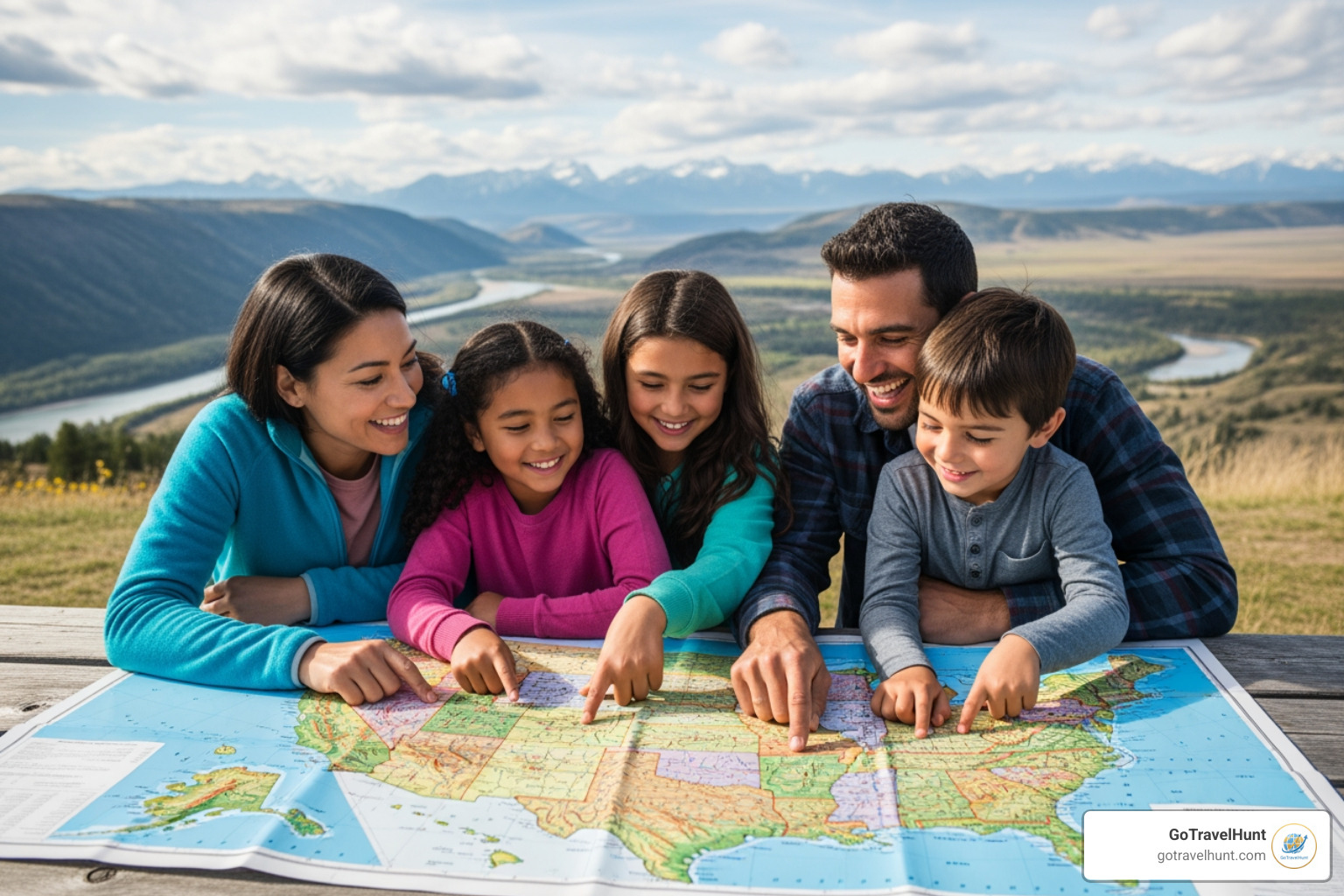
Use maps to build their awareness of your destination. It’s an educational and empowering way for them to feel involved in the navigation. For ideas on kid-friendly destinations, check out our guide on where to travel with kids.
On-the-Go Awareness: Navigating New Environments Safely
Once you arrive, constant awareness is key. New environments are exciting but require you to stay alert. These family travel safety tips will help you steer safely while enjoying every moment.

Situational awareness is your superpower. Keep valuables out of sight and trust your gut—if a situation feels off, change course. Manage crowds by dressing kids in bright colors, holding hands, and visiting popular spots during off-peak hours. Technology can be a great ally; GPS trackers like AirTags provide peace of mind. For international trips, get an esim here for affordable connectivity and use a VPN with the latest APK on public Wi-Fi. A portable charger is a must.
Transportation Safety: Key Family Travel Safety Tips for the Road and Air
Motor vehicle crashes are the leading cause of death among healthy travelers. Car seat safety is non-negotiable, as car seats reduce the risk of fatal injury by 71% for infants. Keep children rear-facing as long as possible and in the back seat until age 13. When renting a car, inspect the provided car seat or bring your own travel-friendly option like the RideSafer Travel Vest, Bubblebum Travel Booster Car Seat, or Hiccapop Inflatable Booster Car Seat. Never leave a child alone in a car.
For flights, the FAA rules for flying with children state the safest place is a government-approved child safety restraint system. While lap infants under 2 are allowed, a separate seat is safest. Plan extra time for airport security and teach children never to joke about threats.
Preventing Separation in Crowded Places
To avoid the panic of losing a child, use these family travel safety tips. Take a daily photo of each child in their outfit for an exact visual reference. Establish designated meeting spots before entering crowded venues. Use the buddy system and a family codeword that means “stop and follow instructions immediately.” GPS trackers like AirTags and RoadID bracelets with contact information add another layer of security.
What to Do if a Child Gets Lost
If a separation happens, a clear protocol is key. Teach children a simple three-step “lost protocol”: STOP where they are, LOOK around for you, and FIND A SAFE ADULT (a uniformed employee or another mother with children) for help. On public transit, they should get off at the very next stop and wait. As a parent, act immediately: shout their name and description to enlist help, and alert the nearest staff or security.
Animal and Wildlife Encounters
Understanding how to interact with animals is an essential part of family travel safety tips. The tragic story of two-year-old Lane Graves is a stark reminder that wildlife dangers exist even in seemingly safe environments. Teach children to respect animals and their boundaries. Never feed wild animals, as it can make them aggressive.
Rabies is a serious risk in many parts of the world. If a child is bitten or scratched by any animal, immediately wash the area with soap and water for 15 minutes and seek medical attention. Teach kids not to approach stray animals, run from dogs, or make sudden movements.
Health & Wellness on the Road: Essential Family Travel Safety Tips
Keeping your family healthy is as crucial as keeping them safe. A bout of illness can quickly derail an adventure. These family travel safety tips address common health challenges to help everyone feel their best.
Food, Drink, and Hygiene Practices
Travelers’ diarrhea is a common vacation spoiler, and children with diarrhea become dehydrated more quickly than adults. To prevent it, live by the rule: “Boil it, cook it, peel it, or forget it.” Stick to foods served steaming hot and fruits you can peel yourself. Avoid raw vegetables and salads. For water safety, choose bottled water with an unbroken seal and skip ice cubes. If bottle-feeding an infant, ensure all equipment is properly disinfected. Frequent hand washing with soap and water is your best defense against germs; use hand sanitizer when that’s not an option. For more advice, explore our family travel tips.
Water Safety at Pools, Beaches, and Lakes
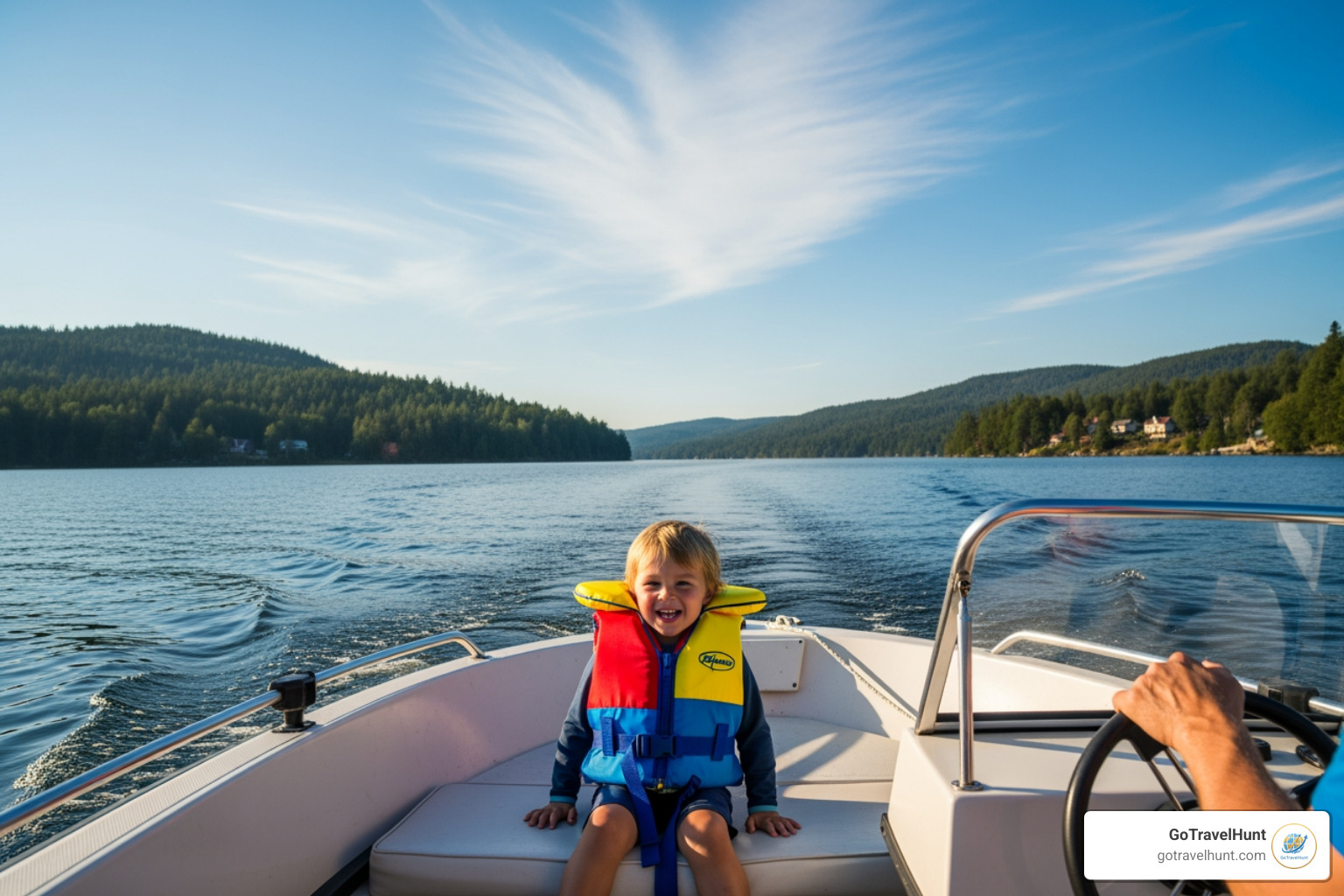
Drowning is a major cause of death when traveling and the leading cause for children aged 1-4. The golden rule is constant, active supervision. An adult with swimming skills must stay within arm’s reach of infants and toddlers near water. On boats or near open water, life jackets are mandatory for children. At beaches, teach kids about rip currents (swim parallel to the shore). Avoid letting children swim in fresh, non-chlorinated water like ponds, which can harbor diseases. For more guidance, learn more about supervising children when they are in water.
Managing Jet Lag, Motion Sickness, and Altitude
These discomforts can hit children hard. For jet lag, gradually shift bedtimes before departure and get plenty of daylight upon arrival. For motion sickness, common in ages 2-12, have kids look at the horizon and avoid screens in moving vehicles. For altitude sickness, which develops more quickly in children, ascend slowly (no more than 300 meters per day above 2,500 meters). Watch for symptoms like vomiting or irritability in young children and stay well-hydrated.
Accommodation and Lodging Safety
Treat your lodging with the same vigilance as your home. Upon arrival, do a safety sweep. Look for hazards like exposed wiring, unstable furniture, and peeling paint. Ensure balcony and window safety, making sure children cannot access them unsupervised. Inspect any provided cribs for broken parts or loose hardware. Locate fire escape routes with your family and ensure all door locks function properly. A simple rubber doorstop can prevent young children from wandering out of the room.
Frequently Asked Questions about Family Travel Safety
What are the most common safety risks for children when traveling?
The most common risks are motor vehicle crashes, which are the leading cause of death for healthy travelers, and drowning, a major risk for children aged 1-4. Other frequent concerns include getting lost in crowded places, foodborne illnesses like travelers’ diarrhea (which causes rapid dehydration in children), and environmental hazards like sunburn and heat exhaustion. Additionally, the risk for most vaccine-preventable diseases is generally higher when traveling abroad.
How can I use technology to keep my kids safe?
Use GPS tracking devices like AirTags or Tiles on backpacks for peace of mind in crowded areas. For older children, wearable GPS watches can offer two-way communication. Family locator apps on smartphones create a digital safety net. Before you travel, pre-program essential emergency numbers into your phone. For international trips, use an eSIM for affordable data and a VPN on public Wi-Fi to protect your family’s personal information. Always carry a portable charger.
What should my child memorize before we travel?
This is one of the most powerful family travel safety tips. Ensure your child can clearly recite their full name, your full names (not just “Mom” and “Dad”), and at least one parent’s cell phone number. They should also know the name of your hotel or accommodation. For younger children who can’t memorize this information, use ID bracelets like those from RoadID or a card tucked securely in their pocket. Practice this information so it becomes automatic, even if they are scared.
Conclusion
Exploring the world with your family creates memories that last a lifetime. By weaving these family travel safety tips into your planning, you give everyone the freedom to enjoy each moment without unnecessary worry.
Preparation, awareness, and prioritizing health are the essential building blocks for safe family travel. While every journey has risks, smart planning allows you to manage them and accept the adventure. It’s about finding that sweet spot where safety meets spontaneity.
At GoTravelHunt, we’re dedicated to making travel planning easy, stress-free, and affordable. We provide comprehensive guides and booking tools designed to help families like yours create unforgettable journeys.
So where will your next adventure take you? Find your next family adventure with our guide to the best vacation spots and start creating those precious memories today. Safe travels!