Mountain hiking trips: Conquer Peaks 2025
Why Mountain Hiking Trips Transform Your Life
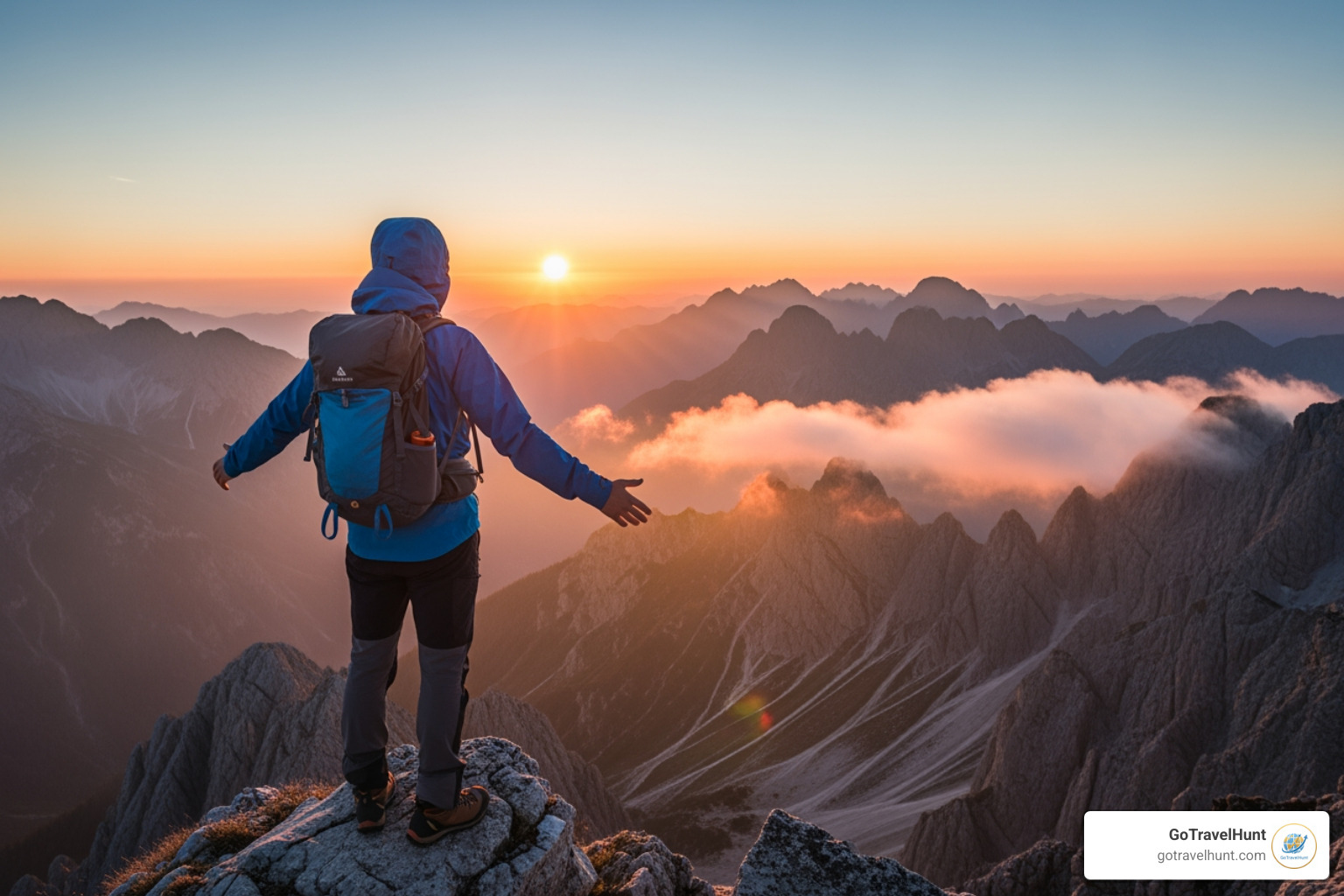
Mountain hiking trips offer more than just exercise—they provide a powerful way to reconnect with nature, achieve mental clarity, and challenge yourself physically. Whether you’re planning a weekend escape or a multi-day adventure, hiking in the mountains delivers benefits that extend far beyond the trail.
Planning your trip involves choosing a hike type (from day hikes to multi-day treks), packing essential gear like layered clothing and safety items, and deciding between a guided tour or an independent adventure.
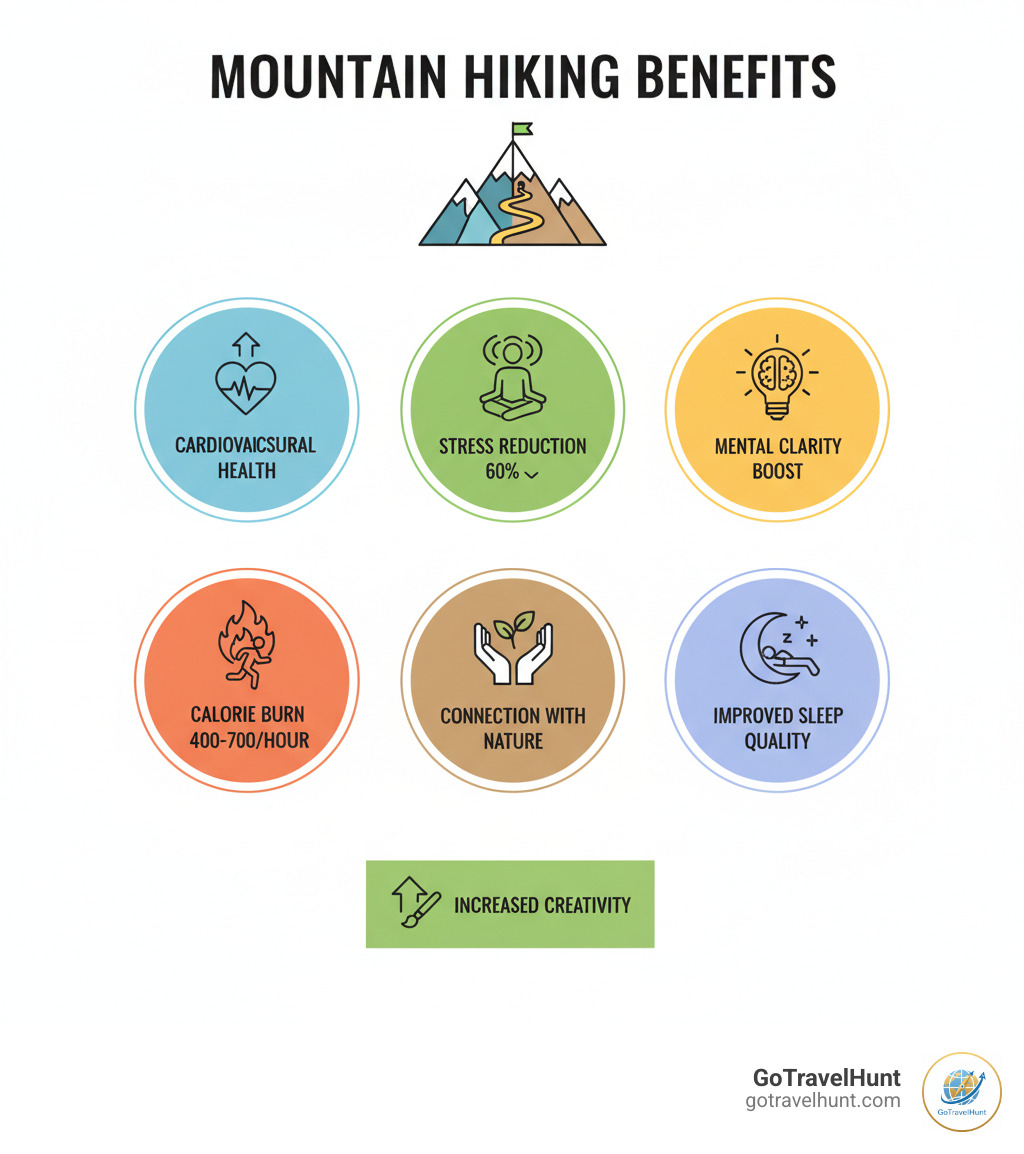
The hiking market is booming, with over 50 million participants in the US in 2023. This reflects a growing awareness of hiking’s benefits: time on mountain trails reduces stress, improves cardiovascular health, and provides a mental detox from our screen-filled lives. Research shows that 60% of hikers cite “connecting with nature” as their primary motivation. The physical rewards include a stronger heart and better endurance, while the mental benefits—reduced anxiety, improved creativity, and a sense of accomplishment—are often even more valuable.
I’m Ramy Saber, founder of GoTravelHunt. My background in project planning and logistics translates directly to the careful preparation required for safe and enjoyable mountain hiking trips.
Find more about Mountain hiking trips:
- authentic travel experiences
- best travel experiences
- experience travel
Choose Your Adventure: Types of Hikes
The beauty of mountain hiking trips is their variety, with an option for every schedule and fitness level.
Day Hikes: Perfect for Beginners and Quick Mountain Hiking Trips
Day hikes are single-day adventures, typically lasting one to eight hours. They offer a taste of the mountains without the need for overnight gear. Their accessibility is a major draw: you’ll generally find well-marked trails, lower elevation gains, and require only minimal gear like good boots, water, snacks, and appropriate clothing.

These hikes are beginner-friendly and perfect for families, those testing their fitness, or anyone needing a quick nature fix. Exploring local trails makes them ideal for Adventure Weekend Breaks. At the end of the day, you can enjoy a hot meal and a comfortable bed.
Multi-Day Treks (Hut-to-Hut or Inn-Based)
Multi-day treks offer deeper immersion in the mountains without the burden of carrying all your gear. These adventures typically run three to five days along a point-to-point route, with overnight stays in mountain huts or lodges. This allows you to carry a lighter pack with just your daily essentials.
However, you’ll need good fitness for consecutive days of hiking, and pre-booking accommodation is essential, as popular huts fill up months in advance. The rhythm of hut-to-hut trekking is magical: you experience the changing landscape on a true journey, sharing stories with fellow hikers each evening. These treks are great for Best Vacation Spots for Couples: Mountain Retreats, blending adventure with comfort.
Backpacking: The Ultimate Multi-Day Mountain Hiking Trips
Backpacking is the ultimate test of self-sufficiency, where you carry everything you need—tents, sleeping bags, cooking gear, and food. This type of trip takes you into remote wilderness where advanced experience, high fitness levels, and solid navigation skills are mandatory for safety.
The reward is unparalleled freedom and solitude. You can set your own pace and camp in stunning locations (while following Leave No Trace principles). Backpacking is well-suited for Solo Hiking Trips for those seeking a profound personal challenge. It’s not for beginners; build your experience with day hikes and multi-day treks first.
Gearing Up: Essential Clothing and Equipment
Proper gear is not just about comfort; it’s a crucial component of safety on mountain hiking trips.
The Layering System for Clothing
Mountain weather is notoriously unpredictable. The key to staying comfortable and safe is the layering system.
- Base Layer: Wicks sweat away from your skin to keep you dry. Choose Merino wool or synthetics, and always avoid cotton, which holds moisture and makes you cold.
- Mid-Layer: Provides insulation. A fleece jacket is a reliable choice, while a synthetic insulated jacket is excellent for colder conditions as it stays warm even when damp.
- Outer Layer: Your shield against wind and rain. A quality waterproof jacket and rain pants are non-negotiable to protect against hypothermia.
Never compromise on warmth and waterproof protection, even if it means carrying a little extra weight.
Footwear and Backpacks
Your feet are your most important tools, so proper footwear is essential.
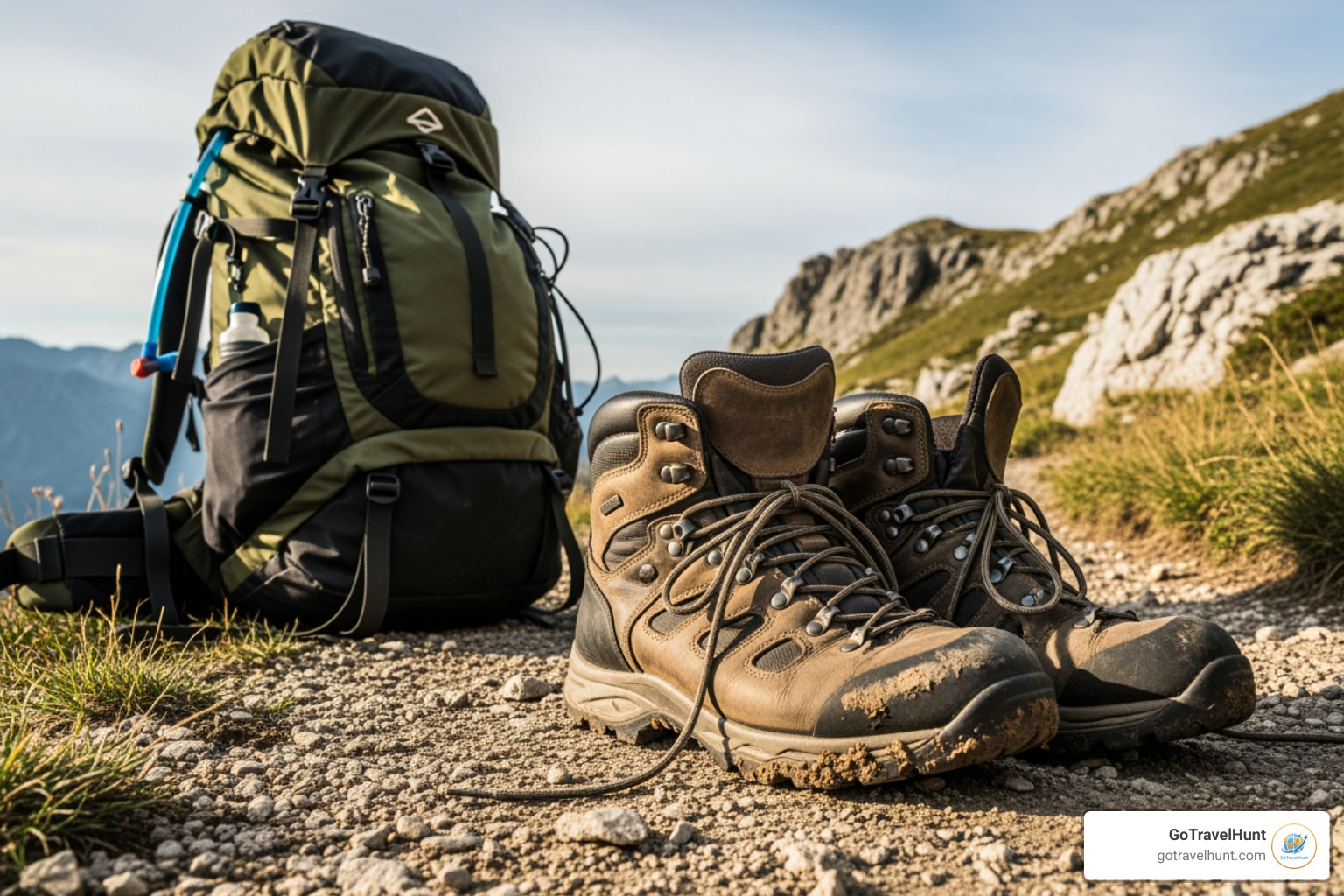
For most mountain trails, sturdy, waterproof hiking boots with ankle support are best. Critically, your boots must be broken-in before your trip to prevent blisters—aim for at least 30 miles of wear. Buy them one size bigger to account for foot swelling and try them on with your intended wool socks. On well-maintained trails, lighter trail runners can be an alternative.
Your backpack size should match your trip: 20-35 liters for day hikes and 50 liters or more for multi-day backpacking. Proper fit is paramount, so have it adjusted to your body. A rain cover or internal dry bags are essential to protect your gear.
The 10 Essentials for Safety
Always carry the “10 Essentials” for safety and self-rescue in unexpected situations.
- Navigation: Map, compass, and a GPS device/phone with downloaded offline maps.
- Headlamp: With extra batteries.
- Sun Protection: Sunscreen, sunglasses, and a hat.
- First-Aid: A kit with blister treatment, bandages, antiseptic wipes, and personal medications.
- Knife: Or a multi-tool for repairs and food prep.
- Firestarter: Waterproof matches, a lighter, or fire steel.
- Emergency Shelter: A space blanket, bivy sack, or lightweight tarp.
- Extra Food: More than you think you’ll need (e.g., high-energy bars).
- Extra Water: And a filter or purifier.
- Extra Clothes: An additional insulating layer to stay warm if conditions change.
For remote areas without cell service, consider a satellite messenger for emergencies.
Safety on the Summit: Key Precautions
Mountain environments are unpredictable. Being prepared for potential hazards is essential for a successful mountain hiking trip.
Weather and Navigation
Mountain weather can change rapidly. Always check the forecast, but be prepared for anything by carrying extra layers and waterproof gear, as conditions at the summit can differ vastly from the base.
Altitude effects are a concern above 2,000 meters (6,561 feet). Symptoms of altitude sickness include headaches, nausea, and fatigue. If you experience them, rest, hydrate, and descend if they worsen. Never push through severe symptoms.
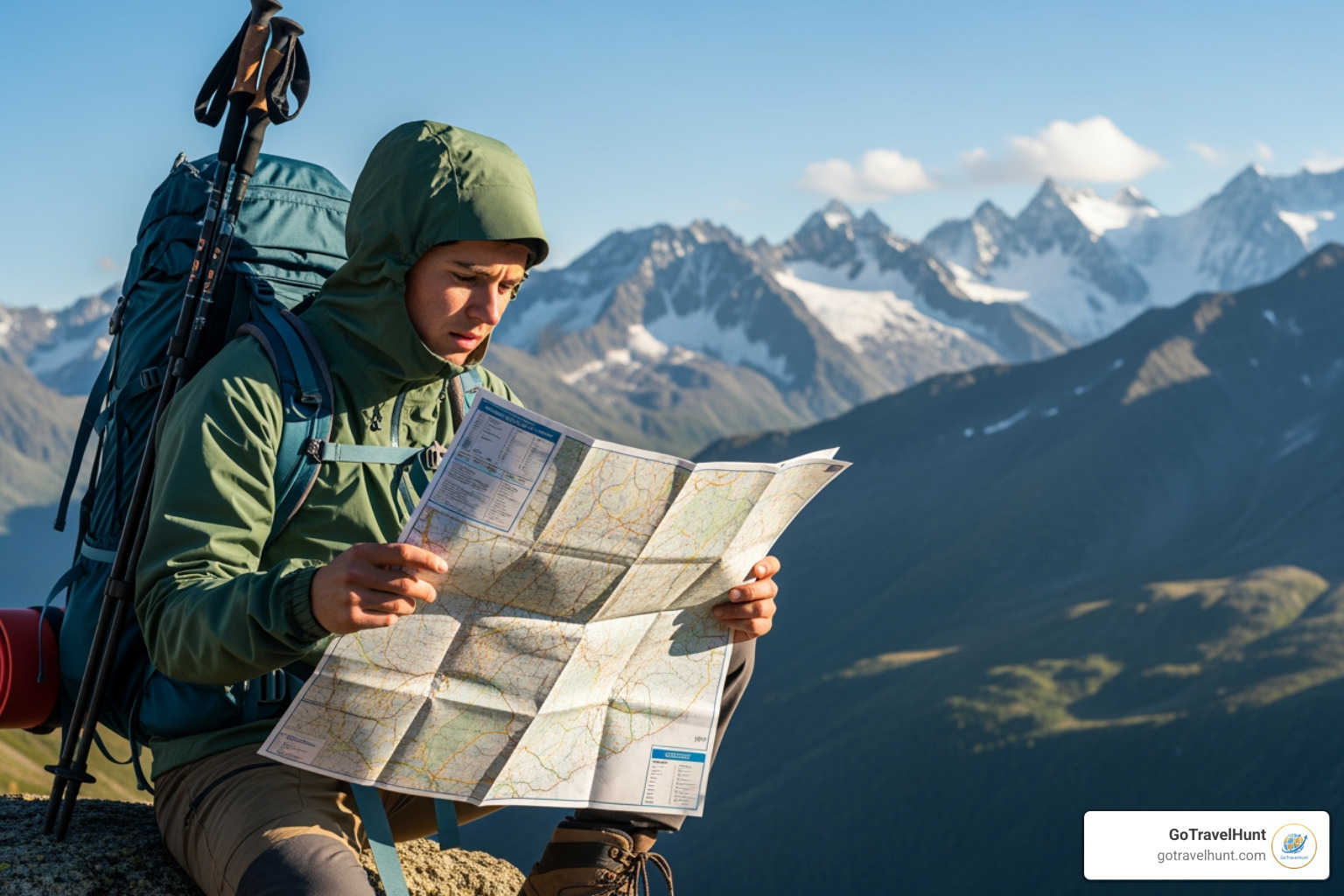
For navigation, do not rely solely on your phone, as service is often absent. Carry a physical map and compass as a backup, and use a GPS device or phone with pre-downloaded offline maps. A satellite messenger is invaluable for emergencies in remote areas. Always inform someone of your hiking plan and expected return time.
Environmental Responsibility and Wildlife
As guests in nature, we must protect it by following the Leave No Trace principles. This includes planning ahead, staying on durable surfaces, packing out all waste (including food scraps), leaving what you find, minimizing campfire impacts, respecting wildlife, and being considerate of others.
Regarding wildlife, observe from a safe distance and never feed animals. This disrupts their natural behavior and can make them aggressive. Store food securely, using bear canisters or proper hanging techniques where required.
Good trail etiquette is also crucial. Stay on marked trails to prevent erosion. Yield to hikers heading uphill, keep noise levels down, and offer a friendly greeting to fellow adventurers. These practices preserve the wilderness for everyone. For more ideas on responsible travel, explore Best Places Weekend Getaway.
Trailblazers Unite: Guided Tours vs. Independent Mountain Hiking Trips
Deciding between a guided tour and going it alone is a key choice when planning mountain hiking trips, depending on your experience, budget, and desired adventure.
The Case for Guided Tours
Expert guides significantly improve safety and enjoyment. They are trained in first aid and mountain rescue, read weather patterns, and steer tricky terrain, allowing you to relax and enjoy the scenery. 85% of participants report increased enjoyment on guided tours.
Guides also provide invaluable local knowledge, sharing insights about geology, flora, and local culture that you wouldn’t find in a guidebook. A major benefit is that all logistics are handled—from permits and hut bookings to transport, freeing you to focus on the hike.
For beginners, guided trips are an excellent learning opportunity to absorb best practices. Some tours even provide essential gear, saving you from a large upfront investment. The social aspect is another bonus, offering a chance for solo travelers to connect with like-minded adventurers in a small group setting.
The Freedom of Hiking Independently
For many experienced hikers, the satisfaction of planning and executing their own mountain hiking trips is the main draw.
The primary advantage is flexibility. You set your own schedule, allowing for spontaneous detours and a more personal journey. Independent hiking is also far more cost-effective, as you only pay for permits, food, and your own gear. This can enable more frequent adventures for budget-conscious travelers.
The sense of achievement from successfully navigating a route and being self-reliant is profound. However, this freedom demands extensive planning and preparation. You are responsible for all research, logistics, and emergency plans.
Strong experience and skills are non-negotiable for independent hiking, including navigation, fitness, and a thorough understanding of mountain safety. For those seeking adventure on their own terms, exploring Best Vacation Spots for Couples: Adventure Getaways can provide inspiration.
Comparing Guided vs. Independent Hiking
| Feature | Guided Tour | Independent Hike |
|---|---|---|
| Cost | Higher (includes guide, logistics, sometimes gear) | Lower (park fees, gear, food) |
| Safety | Higher (expert guide, emergency plans) | Relies on personal skill & prep |
| Planning | Minimal (handled by company) | Extensive (permits, routes, food) |
| Experience | Informative, structured | Flexible, self-reliant |
| Best For | Beginners, complex treks, solo travelers | Experienced hikers, budget travelers |
World-Class Peaks: Top Destinations for Your Next Hike
Europe offers some of the most breathtaking mountain hiking trips on the planet, with diverse landscapes ranging from the iconic jagged peaks of the Alps to the spiritual paths of Spain.
The Alps, Europe
The Alps are Europe’s most famous mountain range, spanning France, Italy, and Switzerland. This region is a hiker’s paradise, offering everything from challenging multi-day treks to leisurely alpine strolls.
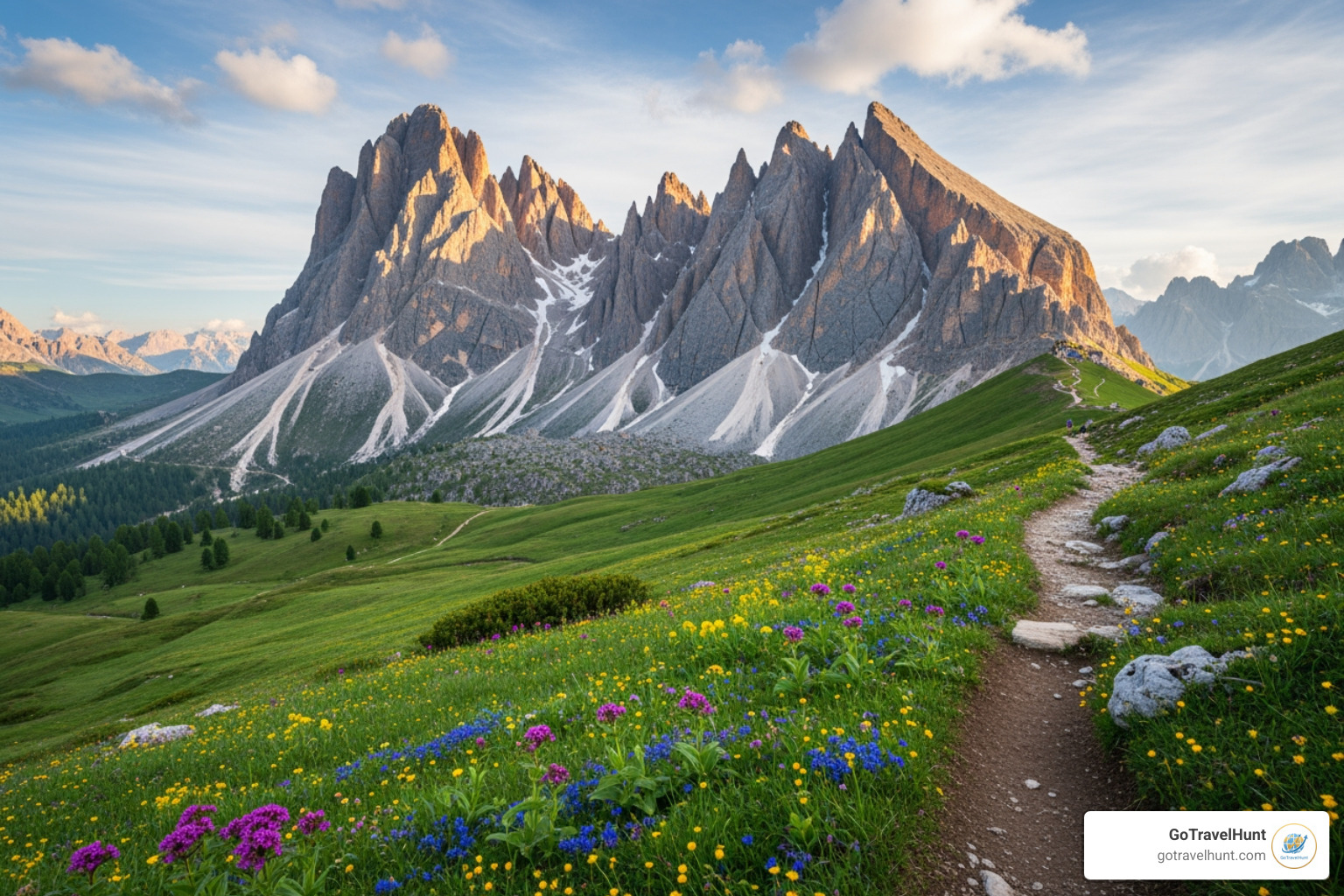
One of the most renowned routes is the Tour du Mont Blanc, a hut-to-hut trek circling the Mont Blanc massif through three countries. Other incredible options include the dramatic peaks of the Dolomites in Italy, known for their unique rock formations, and the extensive network of trails in Switzerland, which boasts over 65,000 kilometers of waymarked paths like the Via Alpina.
Other Iconic European Mountain Hiking Trips
Beyond the central Alps, Europe offers a wealth of diverse mountain hiking trips:
- Camino de Santiago, Spain: Sections of this historic pilgrimage route traverse mountainous terrain, offering a journey of physical challenge and cultural immersion.
- Lofoten Islands, Norway: For dramatic coastal scenery, these islands offer hikes with views of fjords and jagged peaks rising directly from the sea.
- Scottish Highlands, Scotland: The rugged beauty of the Highlands provides endless hiking opportunities, from “munro bagging” to exploring vast glens and lochs.
- Peloponnese, Greece: This peninsula offers beautiful mountain trails leading to hidden villages, monasteries, and stunning coastal views.
- Sicily, Italy: Mount Etna, Europe’s most active volcano, provides unique hiking experiences on its lunar-like landscapes.
These destinations highlight the incredible variety of European mountain hiking trips. For more global inspiration, check out Coolest Places to Visit in the World.
Frequently Asked Questions about Mountain Hiking
Here are answers to common questions about mountain hiking trips to help you plan with confidence.
How fit do I need to be for a mountain hike?
Fitness requirements vary by hike type.
- Easy Day Hikes: If you can walk comfortably for a few hours on varied terrain, you are likely ready.
- Multi-Day Treks: These require better cardiovascular endurance. A dedicated training plan focusing on cardio and strength training for at least 6-8 weeks is recommended.
- Backpacking: This is the most demanding option, requiring excellent physical condition. Prepare with regular long hikes with a weighted pack, plus consistent cardio and strength training.
Always consult a doctor before starting a new strenuous activity. Start small and listen to your body.
What is the best time of year for mountain hiking?
The best time depends on the destination.
- European Alps & High-Altitude Regions: The prime season is summer (June to September), when snow has melted from high passes and huts are open. Weather is still changeable.
- Lower Mountains (e.g., Mediterranean Europe): Spring (April-May) and fall (September-October) are ideal, offering pleasant temperatures and fewer crowds.
- Winter Hiking: This is a specialized activity requiring specific gear, skills, and avalanche awareness, and is not recommended for beginners.
Always research the specific climate and seasonal conditions for your chosen destination.
What are the Leave No Trace principles?
The Leave No Trace (LNT) principles are the seven golden rules of outdoor ethics that minimize our environmental impact.
- Plan Ahead and Prepare: Research your route, weather, and local regulations.
- Travel and Camp on Durable Surfaces: Stay on existing trails and campsites.
- Dispose of Waste Properly: Pack out everything you pack in, including all trash and food scraps.
- Leave What You Find: Take photos, not souvenirs like rocks or flowers.
- Minimize Campfire Impacts: Use established fire rings and ensure fires are completely out. Obey all fire bans.
- Respect Wildlife: Observe from a distance, never feed animals, and store food securely.
- Be Considerate of Other Visitors: Keep noise down and yield to uphill hikers.
Following these principles preserves the wilderness for everyone.
Conclusion
Mountain hiking trips offer a unique chance to challenge yourself, disconnect from daily life, and witness nature at its most magnificent. This guide has equipped you with the knowledge to plan your adventure, from choosing a hike type and packing essential gear to understanding safety and environmental responsibility.
Whether you opt for a guided tour for its ease and expertise or an independent trek for its freedom and flexibility, the reward is an unforgettable journey. The experience is not just about the summit, but about the personal growth and connection to the natural world you gain along the way.
Planning a mountain hiking trip can feel overwhelming, but at GoTravelHunt, we make it easy, stress-free, and affordable. We’re here to help you turn your dream of an alpine adventure into a reality. Explore the rich cultures of mountain communities and find inspiration for your next journey.
Find your inspiration for cultural travel experiences and start planning today. The mountains are calling.