

Flight Fare Finder: Ultimate 2025 Savings
Why Finding the Right Flight Fare Matters for Every Traveler
A flight fare finder is an online tool that searches and compares airfare prices from hundreds of airlines and travel websites, helping travelers find the cheapest flights. Leading flight fare finders process billions of flight queries annually, offering powerful features to pinpoint the best deals.
Key Features to Look For:
- Flexible date calendars showing the cheapest days to fly
- Price alerts that notify you when fares drop
- Multi-city and creative routing options
- Real-time price comparisons from multiple sources
Flight prices change constantly, making it nearly impossible to know if you’re getting a good deal by checking airline websites individually. The average traveler can save hundreds of dollars by using the right tools.
I’m Ramy Saber, founder of GoTravelHunt. After years of managing complex projects, I’ve learned that the best flight fare finder strategies combine smart technology with practical booking knowledge. This guide will show you how to use these tools to stop overpaying for flights.

Glossary for flight fare finder:
- flight deal websites
- cheap flight deals
- budget flight booking
What is a Flight Fare Finder and How Does It Work?
Picture this: you’re dreaming of a weekend getaway to Rome, coffee in hand, ready to book your flight. Now, would you really want to spend your entire morning clicking through dozens of airline websites, manually comparing prices, checking dates, and scribbling notes? I didn’t think so!
This is exactly where a flight fare finder becomes your travel planning best friend. Think of it as your personal flight detective—a smart online tool that does all the tedious searching and comparing for you while you sit back and relax.
At GoTravelHunt, we believe finding affordable flights shouldn’t feel like solving a complicated puzzle. A flight search engine works as a price aggregator, gathering flight information from hundreds of sources and laying it all out in one convenient spot. Instead of visiting site after site, you search once and see everything.
Here’s the fascinating part: these platforms process billions of queries every year. Some tools scan over 1,200 airlines and travel providers simultaneously, ensuring you’re not missing out on any options. That’s the power of massive data processing working in your favor.

The real difference between using a flight fare finder and booking directly with an airline? It’s all about perspective. When you go straight to an airline’s website, you’re only seeing their flights, their prices, their schedules. But with a fare finder, you get the full picture—every airline, every route option, every price point for your chosen dates. It’s like comparing one store’s prices versus checking every store in the mall at once.
And here’s something exciting: AI in travel is making these tools smarter every single day, changing how we find and book flights.
How a Flight Fare Finder Compares Prices
Ever wonder what happens in those few seconds after you hit “search”? There’s quite a bit of digital magic happening behind the scenes.
When you enter your travel details—let’s say Paris to Berlin on specific dates—the flight fare finder doesn’t just check one database. It sends out simultaneous queries to hundreds of travel providers through API integration. These APIs are like digital handshakes between the search engine and airline websites, allowing real-time data to flow freely.
Within moments, the tool collects responses from countless sources. All this information gets processed, organized, and displayed on your screen in a clean price comparison dashboard. You can sort by price, flight duration, number of stops, departure times, and more. Everything you need to make an informed decision appears in one place.
The beauty of data collection at this scale means you’re seeing options you might never have finded on your own. Maybe there’s a budget carrier you’ve never heard of, or perhaps a major airline is running a flash sale. The fare finder catches it all and brings it to you.
The Role of AI and Historical Data
Now, let’s talk about something that really excites me—how predictive analytics and machine learning algorithms are revolutionizing flight searches.
Modern flight fare finder tools don’t just show you today’s prices. They’re getting smarter by analyzing historical price trends from millions of past searches. These machine learning systems spot patterns that would be impossible for us to notice manually.
Here’s where it gets practical: some tools now offer 7-day price predictions based on this historical data. They can tell you whether the fare you’re looking at is likely to go up or down over the next week. This price forecast feature helps answer that nagging question we all have: “Should I book now or wait?”
By understanding when prices typically dip or spike for specific routes, these AI-powered tools can advise you on the best time to book. It’s like having a travel expert who’s analyzed thousands of flights and can give you personalized guidance. The technology keeps learning and improving, making its predictions more accurate with every search.
This combination of real-time data and predictive insights means you’re not just finding flights—you’re making informed decisions that can save you serious money.
Key Features That Help You Save Money
A powerful flight fare finder is packed with clever features designed to put real money back in your pocket. Think of these tools as your personal travel-saving sidekicks, working behind the scenes to help you outsmart the airlines at their own pricing game.
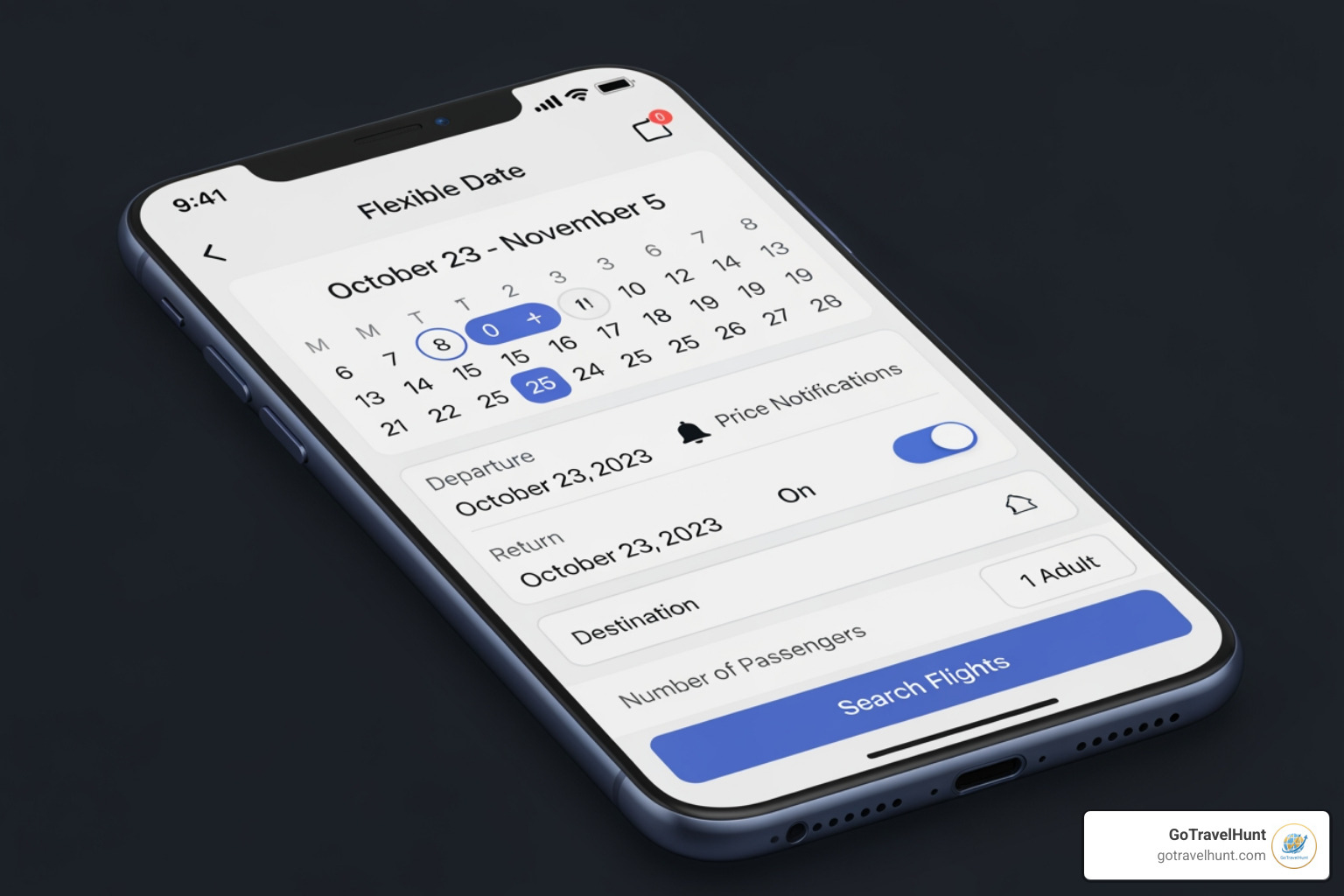
Flexible Date Options: Your Ticket to Big Savings
If your travel dates are flexible, you can save a surprising amount of money. Instead of locking into one specific date, use flexible date search options. Most flight fare finder platforms offer a +/- 3 days view that shows how prices fluctuate across a week. Shifting your trip by just one day can sometimes save you a significant amount.
For even greater savings, use the whole month search or cheapest month feature. If you’re planning a trip from Paris to Barcelona but aren’t sure when to go, select “cheapest month” to see a calendar highlighting the best deals. This is perfect for planning holidays when your schedule is open.
Generally, mid-week travel—particularly on Tuesdays and Wednesdays—is cheaper than weekend flights because of lower demand from business and leisure travelers.
Price Alerts and Tracking: Let the Deals Come to You
Instead of obsessively checking prices, use price alerts. This valuable feature of any good flight fare finder lets you track a specific route and receive a notification via email or app the moment the fare drops.
This passive approach to price tracking means the tool does the monitoring for you 24/7. Set up an alert for that Paris to Rome flight, and if the price drops, you’ll know immediately. App alerts are especially useful, delivering deals straight to your phone so you can act fast.
Uncovering Hidden Deals with a Smart Flight Fare Finder
Advanced features help you find deals most people never see.
Hacker Fares are when a flight fare finder finds that booking two separate one-way tickets (often on different airlines) is cheaper than a traditional round-trip. This strategy of combining one-way tickets for self-connect flights can lead to substantial savings, though it requires careful attention to connection times.
For spontaneous travelers, the ‘Everywhere’ search is a game-changer. Enter your home airport, select “Everywhere” as your destination, and the tool will display the cheapest flights to destinations all over the world. It’s perfect for turning a free weekend into an adventure to wherever the best deal takes you.
Finally, don’t forget last-minute deals. While booking early is often wise, airlines sometimes slash prices on unsold seats. A good fare finder helps you spot these opportunities, whether you’re planning months ahead or looking to fly tomorrow.
A Step-by-Step Guide to Finding the Best Fare
Finding the perfect flight is easy with the right approach and a reliable flight fare finder. Here’s a simple guide to steer the booking process.
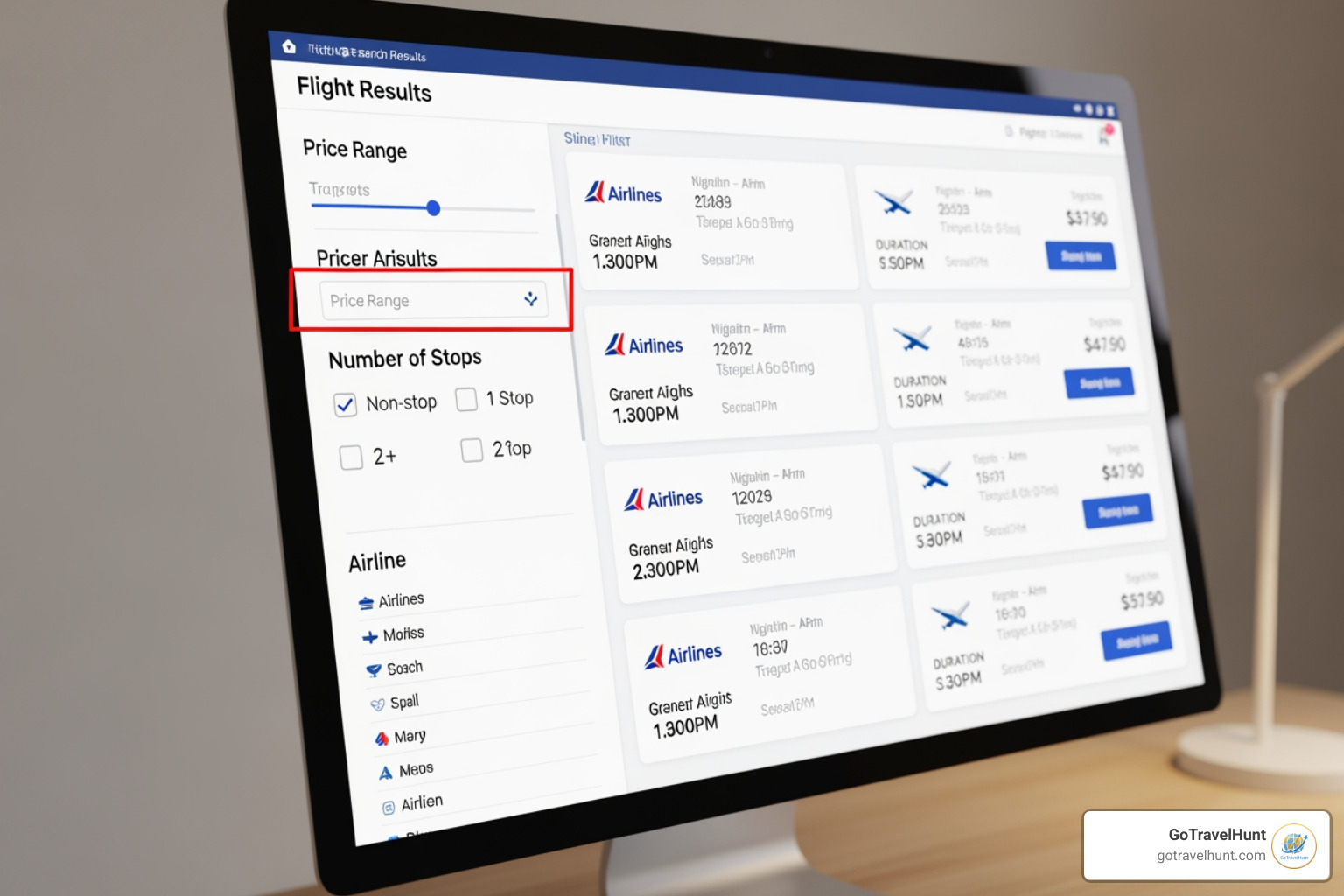
Step 1: Master the Search
The foundation of a great deal starts with your search setup.
- Enter your origin and destination, and choose between a one-way vs. round-trip ticket.
- Use flexible date features like “Whole month” or “Cheapest month” if your schedule allows.
- Specify the number of passengers and your preferred cabin class (usually Economy for budget travel).
- For trips with multiple stops, use the multi-city search option to build complex itineraries.
- Pro Tip: Always tick the “Include nearby airports” box. Flying into an alternative airport can often result in significant savings, especially with budget airlines.
Step 2: Filter and Compare Your Options
Once you have your search results, use filters to narrow them down.
- Stops: Decide between the convenience of a non-stop flight and the potential savings of a one-stop option.
- Airline: Filter by your preferred carriers or exclude ones you’d rather avoid.
- Flight Duration: Set a maximum travel time to avoid excessively long journeys.
- Price Range: Use the price slider to eliminate options outside your budget.
- Layover Times: Pay attention to connection times to ensure they are neither too short nor too long.
Here’s a real-world comparison for a popular route:
| Flight Option | Price (Approx.) | Travel Time (Approx.) | Stops | Considerations |
|---|---|---|---|---|
| Non-Stop (Paris-Rome) | €120 | 2h 00m | 0 | Fastest, most convenient |
| One-Stop (Paris-Rome) | €80 | 4h 30m | 1 | Cheaper, longer, potential for layover city visit |
This table illustrates the classic trade-off between convenience and cost.
Step 3: Secure the Best Deal
When you’re ready to book, you’ll be redirected to the airline or online travel agency’s website.
- Check the final price on the booking site, as it can sometimes change due to dynamic pricing.
- Watch for hidden costs. Baggage fees and seat selection fees can add up, especially on budget airlines. Always factor these extras into your total cost.
- Confirm currency and language. Ensure the booking site displays prices in your preferred currency (e.g., Euros) to avoid confusion during checkout.
Potential Downsides and How to Overcome Them
While flight fare finder tools are incredibly useful, they aren’t perfect. Knowing the potential hiccups can help you steer them easily.
Price discrepancies are a common frustration. You see a great fare, click through, and the price on the booking site is higher. This is often due to cached data (the search result is a few minutes old) or because the last cheap seats were just sold. The fix? Act quickly when you see a good deal. If the price changes, try another provider from the search results or run the search again.
Many of the best deals come from third-party booking sites (online travel agencies). Most are reputable, but smaller, unknown agencies might have less responsive customer service or stricter change policies. Before booking with an unfamiliar agency, do a quick online search for reviews to avoid potential headaches.
If something goes wrong (e.g., a flight cancellation), you’ll need to contact the agency you booked with, not the airline or the flight fare finder. For complex trips or if you value direct airline support, booking directly might be worth a slightly higher price.
Finally, prioritize booking safety. Always verify you’re on a secure website (look for “https://” and a padlock icon in the address bar) before entering payment details.
These potential downsides are minor compared to the savings. With a bit of awareness, you can easily sidestep these challenges and enjoy stress-free, affordable travel planning.
Frequently Asked Questions about Finding Cheap Flights
Understanding timing and strategy can make a real difference to your travel budget. Here are answers to the most common questions we get.
When is the best time to book a flight?
There’s no single magic answer, but there are solid guidelines.
- For domestic flights within Europe, booking 1 to 3 months in advance is typically the sweet spot.
- For international flights from Europe, start looking 2 to 8 months before departure. Data suggests that around 54 days out is often the cheapest time to buy.
Last-minute deals exist but are a gamble, as prices can just as easily skyrocket. It’s better to book within the optimal window and set up price alerts on your flight fare finder to catch any unexpected drops.
What is the cheapest day of the week to fly?
If your schedule is flexible, flying on the right day can save you money. Mid-week travel is consistently cheaper than flying on weekends.
Tuesdays and Wednesdays are typically the best days for low fares. This is due to simple supply and demand: most leisure travelers fly on weekends, and business travelers on Mondays and Fridays. Flying when demand is lower means airlines reduce prices to fill seats.
How can I find the cheapest flights if my destination is flexible?
This is where a flight fare finder becomes an inspiration machine.
The “Everywhere” search feature is brilliant for this. Enter your departure city, select “Everywhere” as the destination, and the tool will show you the cheapest flights to places all over the world. You might find an affordable trip to Lisbon or Budapest you hadn’t considered.
Some tools also offer an “Explore” map feature, which visually displays flight prices to various cities from your home airport. This approach, known as price-led travel, lets the best fares guide your destination choice. It’s perfect for spontaneous trips and often leads to the most memorable adventures.
Conclusion: Your Journey to Affordable Travel Starts Now
A flight fare finder is your passport to smarter, more affordable travel. We’ve seen how these tools scan billions of data points to find the best options and use AI to predict price movements, helping you decide when to book.
Features like flexible date searches, price alerts, and “Everywhere” searches are practical tools that can save you hundreds of euros. That’s money you can spend on what truly matters: the experience.
At GoTravelHunt, our mission is to make travel planning easy and affordable for everyone. By using a flight fare finder strategically, you become a savvy traveler who knows how to get the best deal. Saving money on flights opens up possibilities, turning dream trips into reality.
Whether you’re planning a quick weekend escape or a grand European tour, your journey to affordable travel starts with a smart search. Take what you’ve learned, fire up your favorite flight fare finder, and start exploring. The world is waiting, and it’s more affordable than you think.
Ready to find even more ways to travel smart? Explore more budget travel tips and join our community of travelers who refuse to overpay for their adventures.